When you visit our website, information may be stored or recovered on your device, mainly in the form of cookies. We use essential cookies to ensure the website works as it should, and statistical and marketing cookies for audience measurement and content customisation purposes. We rely on Google for statistical and marketing cookies in order to measure website performance and display relevant advertising. For more information on this, please also refer to the Google policy on Business Data Responsibility.
From the Cookie Management Centre, you can set your preferences with respect to the use of cookies: accept or reject certain categories, accept all, or reject all. For detailed information on all cookies used across these three categories, please refer to our Cookie Policy.
Please note that blocking certain cookies may affect your experience and the services offered.
Essential cookies Always active
Essential cookies help the website to work as it should by enabling necessary functionalities, such as navigating between pages and accessing secure areas. These cannot be disabled in our systems.
Statistical cookies
Statistical cookies help us understand how visitors interact with our site by collecting and communicating browsing information. They make it possible to identify the most and least visited pages and to improve the overall performance of the site.
Marketing cookies
Marketing cookies are used to display relevant advertising and measure the performance of campaigns. If you choose not to allow these cookies, you will continue to see ads, but they will be less relevant to your interests.
Choose the purposes for which we may use Google products to collect and use your data:
User storage: to technically permit advertising functionality.
User data for advertising: to optimise our advertising campaigns.
Ad customisation: to tailor advertising to your interests.
Elevated energy prices are forcing central banks to respond with tighter monetary policy
We expect a further rate hike from both the Federal Reserve and the European Central Bank this year, as well as a hike by the Bank of England
We anticipate an additional 75 basis points of rate increases by the Bank of Japan, with a raise now expected in December 2026 and further tightening in 2027, to take the policy rate to 2%
These limited monetary policy adjustments will not initiate a new rate-hiking cycle, nor do we expect them to derail the economic expansion. We maintain our positive view on risk assets.
A more enduring Middle East conflict than we had expected is keeping energy prices high and prompting a response from central banks to tame inflationary pressures. While we expect fine-tuning of policy rates ahead, we do not think this will constitute a new rate-hiking cycle.
Strong demand in the global economy is supporting resilient economic growth. To date, however, this shows few signs of driving up wages and domestic inflationary pressures in developed economies.
Sign up for our newsletter
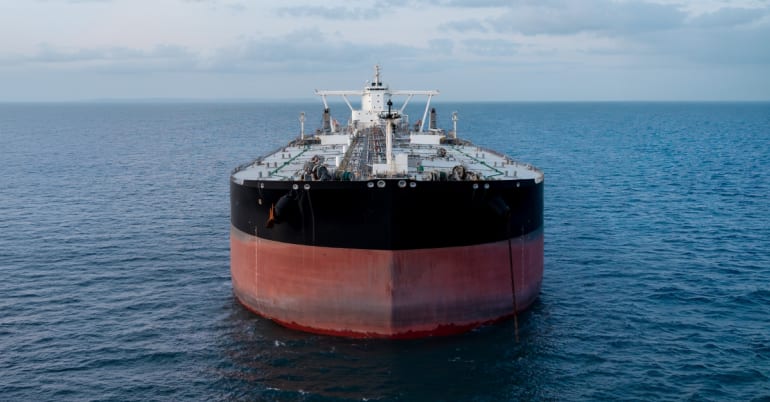
At the same time, conflict in the Middle East, and the ongoing impact of the Russia-Ukraine war, is keeping energy prices high. This combination of resilient growth and high energy prices is keeping major central banks focused on inflation, and has now shifted the balance of risks towards additional monetary policy tightening. Flows through the Strait of Hormuz are still restricted, and Houthi attacks are now threatening Saudi oil infrastructure and to disrupt the Bab al-Mandab transit route. Our new base scenario sees oil prices averaging USD 100/barrel through end-2026, before declining in 2027.
A combination of resilient growth and high energy prices is keeping major central banks focused on inflation
By the end of 2026, we now expect a further policy rate rise in the US and eurozone, a hike in the UK, and have brought forward a hike for Japan. However we do not see this as a major pivot by central banks, or the starting of a rate-hiking cycle in the US, eurozone or UK.
In the US, the Federal Reserve meeting in September delivered a unanimous 25 basis point hike, accompanied by language that was focused on price stability, with projections showing both inflation and growth slightly higher than the committee forecast in June. We now expect an additional increase in the Fed’s December meeting and a stable policy rate in 2027, in line with the committee’s own forecasts.
A meaningful improvement in the US inflation trend is unlikely to materialise within the next couple of months, with inflation only likely to approach the Fed’s 2% target in late 2027, after having spent six years above it. Chair Kevin Warsh’s emphasis on getting inflation to target as a priority thus seems consistent with some additional monetary tightening.
Fed Chair Kevin Warsh’s emphasis on getting inflation to target as a priority seems consistent with some additional monetary tightening
In Europe, the European Central Bank also delivered a 25 bps rate hike in September, with new projections also showing higher inflation and resilient growth. Given the absence of any second-round effects from higher energy prices and the fact that expectations around future inflation seem firmly anchored among the general public, we think the 50 bps of rate hikes it has delivered so far is a sufficient response. However, the balance of risks indicates to us that the ECB will deliver a final 25 bps hike in December. We still think market expectations for further ECB tightening look too high.
In the UK, the Bank of England has chosen to remain on hold until now, including at its 17 September meeting. With second round inflationary effects of high energy prices not yet visible, its preferred stance has been to simply postpone the rate cuts that looked likely at the start of the year rather than tighten policy. Yet Governor Andrew Bailey noted that with inflation forecast to rise going in 2027, the BoE may have to raise rates in the months ahead. We now expect a hike in November – and then for the policy rate to be held for much of next year.
We also expect both the ECB and the BoE to start reversing these rate hikes towards the end of 2027 as the impact of high energy prices fades.
In contrast to much of Europe, Switzerland faces a slightly different macroeconomic backdrop, with less reliance on imported energy and much lower inflation. We thus expect no change to the Swiss National Bank’s policy rate both in 2026 and into 2027.
Finally, in contrast to other major developed economies, Japan’s central bank is engaged in a monetary policy normalisation cycle. It too raised its benchmark policy rate in September, to 1.25%. Governor Kazuo Ueda gave some hawkish signals, noting that inflation risks would be assessed at every meeting, and that he would not rule out a 50 bps hike or hikes in successive meetings. However, he stressed the need to avoid triggering major adjustments in lending or asset values. The BoJ Board was also split in September, with two members voting to keep rates on hold rather than raise them.
We think that the BoJ’s next rate increase could be brought forward to December 2026, followed by further 25 bp adjustments in March and June 2027
We still foresee an additional 75 bps of hikes in total from the BoJ to take the policy rate to 2.0% in 2027. We now think that the BoJ’s next rate increase could be brought forward to December 2026, followed by further 25 bp adjustments in March and June 2027. We also believe that 2% will represent a ceiling for rates.
In summary, an environment of high energy prices, against a backdrop of resilient demand, is pressuring central banks to react. Yet even at today’s elevated levels, we do not expect oil prices to significantly derail growth, while in most cases, monetary tightening will also be done via small adjustments to the policy rate. In our view, these will not be enough to derail the expansion, and we maintain our positive view on risk assets.
CIO Office Viewpoint
High energy prices will drive further monetary tightening
This is a marketing communication issued by Bank Lombard Odier & Co Ltd (hereinafter “Lombard Odier”).
It is not intended for distribution, publication, or use in any jurisdiction where such distribution, publication, or use would be unlawful, nor is it aimed at any person or entity to whom it would be unlawful to address such a marketing communication.





share.