When you visit our website, information may be stored or recovered on your device, mainly in the form of cookies. We use essential cookies to ensure the website works as it should, and statistical and marketing cookies for audience measurement and content customisation purposes. We rely on Google for statistical and marketing cookies in order to measure website performance and display relevant advertising. For more information on this, please also refer to the Google policy on Business Data Responsibility.
From the Cookie Management Centre, you can set your preferences with respect to the use of cookies: accept or reject certain categories, accept all, or reject all. For detailed information on all cookies used across these three categories, please refer to our Cookie Policy.
Please note that blocking certain cookies may affect your experience and the services offered.
Essential cookies Always active
Essential cookies help the website to work as it should by enabling necessary functionalities, such as navigating between pages and accessing secure areas. These cannot be disabled in our systems.
Statistical cookies
Statistical cookies help us understand how visitors interact with our site by collecting and communicating browsing information. They make it possible to identify the most and least visited pages and to improve the overall performance of the site.
Marketing cookies
Marketing cookies are used to display relevant advertising and measure the performance of campaigns. If you choose not to allow these cookies, you will continue to see ads, but they will be less relevant to your interests.
Choose the purposes for which we may use Google products to collect and use your data:
User storage: to technically permit advertising functionality.
User data for advertising: to optimise our advertising campaigns.
Ad customisation: to tailor advertising to your interests.
China's Politburo announced a first monetary policy easing in 14 years, aimed at boosting domestic consumption and stabilising financial markets
Market reactions to Chinese stimulus have been mixed in recent months, with Chinese stocks failing to reach new highs
Structural issues remain in the real estate market and the need for reforms casts doubt on the effectiveness of current stimulus
More decisive measures are needed to justify raising any exposure to Chinese equities. Given the cautious outlook and limited upside potential, we retain existing exposure through emerging market indices.
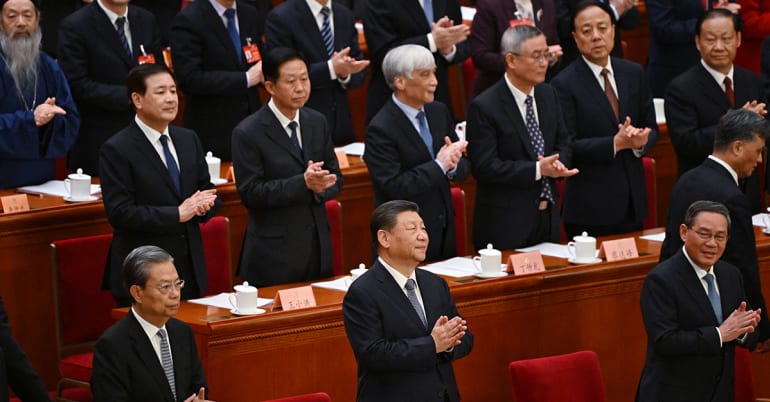
China’s Communist Party Politburo announced a move from “prudent” to “moderately loose” monetary policy, the first such easing since 2011. Coupled with proactive fiscal measures, the shift aims to boost domestic consumption and stabilise financial markets. This is not a major policy framework change and China’s stimulus efforts have disappointed investors in the past.
The announcement on 9 December builds on a series of stimulus measures rolled out by China in recent months. These have included interest rate cuts, relaxing home-buying restrictions, and a RMB 10 trillion (USD 1.4 trillion) debt swap plan to help local governments manage outstanding payments, including salaries. Over two weeks in late September and early October, the Shanghai Composite Index jumped more than 30% in response, its largest rally in four years. However, market reactions since have been mixed, with Chinese stocks failing to set new highs despite additional stimulus measures.
China’s structural issues remain unresolved. The real estate market continues to suffer from an oversupply of unsold or unfinished homes, pressuring prices and creating ripple effects for banks and mortgage holders. While investment as a share of gross domestic product (GDP) is declining, it remains higher than in other major economies, indicating ongoing overinvestment. The Communist Party’s call for “extraordinary countercyclical adjustments” to boost consumption and domestic demand highlights the need to address structural problems. However, there are doubts about whether the announced measures can achieve these objectives.
China’s structural issues remain unresolved
As Beijing prepares for the annual parliamentary session in early 2025, there are expectations that the GDP growth target will be set around 5%. With the prospect of the next Trump administration’s tariffs on Chinese imports and weak domestic demand, we think China now needs to go even further to offset the impact on its trade if it is to keep economic growth at current levels of 4.5%.
We have been anticipating an additional RMB 3 trillion of central government debt issuance since mid-September. The Central Economic Work Conference (CEWC) that runs 11-12 December should provide additional signals on fiscal and monetary policies. We may see some guidance for additional measures to boost domestic demand, perhaps worth as much as RMB 1 trillion. Together, these could influence market sentiment and investment strategies.
The shift to a “moderately loose” monetary policy does not represent a major framework change. The “extraordinary easing” rhetoric is encouraging for international investors, but in the past we have seen a mismatch between Beijing’s plans and investor expectations. In addition, fiscal policies often include internal financing programmes that may not have a direct impact on growth. This, in our view, underlines the superiority of monetary policy for broad economic stability over fiscal measures.
The shift to a “moderately loose” monetary policy does not represent a major framework change
Persistent structural challenges and mixed market reactions suggest a cautious approach is appropriate for investing in Chinese financial assets. The effectiveness of the recently-announced measures in addressing these challenges will be crucial in determining the future trajectory of China’s economy, and its stock markets.
Given the cautious outlook and limited upside potential, we retain our existing exposure to Chinese equities through emerging market indices. We think it is too early to add more risk exposure to China: without more decisive policy measures, the potential for Chinese stocks to gain, relative to their peers in the MSCI Emerging Markets index, remains limited.
CIO Office Viewpoint
China’s woes drive shift to looser monetary policy
This is a marketing communication issued by Bank Lombard Odier & Co Ltd (hereinafter “Lombard Odier”).
It is not intended for distribution, publication, or use in any jurisdiction where such distribution, publication, or use would be unlawful, nor is it aimed at any person or entity to whom it would be unlawful to address such a marketing communication.




share.