When you visit our website, information may be stored or recovered on your device, mainly in the form of cookies. We use essential cookies to ensure the website works as it should, and statistical and marketing cookies for audience measurement and content customisation purposes. We rely on Google for statistical and marketing cookies in order to measure website performance and display relevant advertising. For more information on this, please also refer to the Google policy on Business Data Responsibility.
From the Cookie Management Centre, you can set your preferences with respect to the use of cookies: accept or reject certain categories, accept all, or reject all. For detailed information on all cookies used across these three categories, please refer to our Cookie Policy.
Please note that blocking certain cookies may affect your experience and the services offered.
Essential cookies Always active
Essential cookies help the website to work as it should by enabling necessary functionalities, such as navigating between pages and accessing secure areas. These cannot be disabled in our systems.
Statistical cookies
Statistical cookies help us understand how visitors interact with our site by collecting and communicating browsing information. They make it possible to identify the most and least visited pages and to improve the overall performance of the site.
Marketing cookies
Marketing cookies are used to display relevant advertising and measure the performance of campaigns. If you choose not to allow these cookies, you will continue to see ads, but they will be less relevant to your interests.
Choose the purposes for which we may use Google products to collect and use your data:
User storage: to technically permit advertising functionality.
User data for advertising: to optimise our advertising campaigns.
Ad customisation: to tailor advertising to your interests.
Rethink Perspectives: how to anticipate shifts in markets, taxation and business transfers
key takeaways.
Geopolitical fragmentation is fuelling a new investment cycle in technology, defence and infrastructure, supporting growth and corporate earnings
Strong cash flows and resilient labour markets continue to support exposure to growth assets, alongside diversification and disciplined risk management
Swiss tax reforms from 2029 and 2032 will reshape decisions around property, borrowing, pensions and the allocation of wealth between spouses
A company’s theoretical value can differ materially from the price a buyer is prepared to pay
Successful business transfers depend on early alignment between founders, partners and family members.
The economic, financial and wealth-management landscape is changing fast. Geopolitical tensions, higher energy costs, shifting monetary policy, tax reforms, and technological advancements are altering long-held assumptions about how investors, entrepreneurs, and families should deploy capital, make business decisions, and preserve wealth.
So, how should investors position portfolios as geopolitical risks mount but economic growth remains resilient? How can families anticipate tax changes that could significantly reshape the way wealth is structured and managed? And how should business owners prepare for succession when the considerations extend far beyond financial value?
Sign up for our newsletter
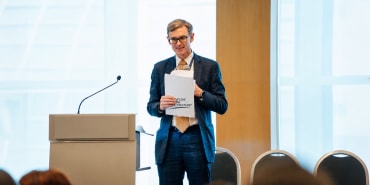
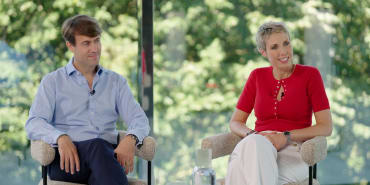
These were the key questions at the heart of our latest "Rethink Perspectives" edition, held in Crans-Montana on 15 September 2026. Opening the discussion, David Fournier, Head of French-speaking Switzerland for private banking activities (excluding Geneva), set the scene for three of the Firm's experts to examine the forces shaping investments, wealth and ownership: Samy Chaar, Partner, Chief Economist and CIO Switzerland, on macroeconomic and investment outlooks; Samuel Meylan, Head of Tax and Legal Advice for Clients Resident in Switzerland, on developments in Swiss taxation; and Maxime Dubouloz, Director Corporate Advisory, on challenges with business transfers.
We have crossed into a fragmented world, defined by one simple truth: we cannot rely on anyone else and must ensure our own resilience
An increasingly fragmented world, yet a resilient global economy
At first glance, the signals seem at odds. Geopolitical tensions are mounting, energy prices rising, and interest rates remain high. Yet the global economy remains resilient, while financial markets have absorbed a succession of shocks. For Samy Chaar, the explanation lies in "strong demand and the particular nature of today's economic cycle". Rather than being driven by the traditional engines of credit or construction, this cycle reflects a more fundamental transformation of the global economy.
Globalisation was built in part on economic interdependence, with countries relying on one another for their structural needs: for industry, energy and even security. Geopolitical fragmentation is calling that model into question, prompting governments and companies to secure the technologies, resources, supply chains and infrastructure which they rely on. "We have crossed into a fragmented world, defined by one simple truth: we cannot rely on anyone else and must ensure our own resilience," says Samy Chaar. He describes this dynamic as "an economic security cycle", in which investment is increasingly driven by the need for strategic resilience, generating demand and supporting domestic economic activity.
This trend is no longer confined to large technology companies. Investment in AI remains substantial, but it is increasingly part of a broader shift across many sectors, with profit growth spreading more widely throughout the economy. For investors, the key question is therefore not whether risks exist, but whether the economic cycle is strong enough to absorb them.
How long can this cycle last?
"No economic cycle lasts forever," Samy Chaar explains. He likens assessing how long they might last to watching a marathon runner: the key is to recognise the first signs of fatigue before they become more pronounced. That means keeping a close eye on several indicators:
1. Capacity to finance the investment cycle. Businesses continue to generate strong cash flow, giving them the necessary resources to finance investments. But the cycle’s strength also needs to be assessed across the economy, taking into account the financial position of households, businesses, banks, and governments.
2. Corporate profitability. Investments are still generating strong returns, while earnings continue to exceed expectations. However, a sustained decline in profitability would be an early signal that the cycle is losing momentum.
3. The labour market and inflation trends remain strong. Unemployment rates in Europe and the United States remain near their lowest levels in nearly 40 years, with no clear signs of meaningful deterioration. At the same time, while the energy shock is prompting central banks to adjust monetary policy, Samy Chaar believes the required tightening remains, for now, relatively modest compared with previous rate-hike cycles.
For investment portfolios, this analysis continues to support exposure to the growth cycle, while maintaining a high degree of diversification. "As long as there are no signs of running out of steam, we are staying invested," Samy Chaar emphasises. He continues to favour equities in particular, alongside assets that can help cushion volatility and a disciplined approach to risk management.
As long as there are no signs of running out of steam, we are staying invested
Swiss taxation: changes to anticipate from today
Beyond the markets, Swiss taxpayers also need to prepare for a number of structural changes. Samuel Meylan focused on two reforms set to have a big impact on wealth planning over the next few years: the abolition of imputed rental value and the introduction of individual taxation for married couples.
The first will come into force on 1 January 2029. The abolition of the imputed rental value will be accompanied by the end of the deduction for maintenance costs on owner-occupied properties, including principal and secondary homes, as well as most deductions of borrowing costs. Two exemptions will remain. First-time buyers will continue to benefit from an interest deduction, but this will be capped at CHF 10,000 per year for married couples and CHF 5,000 for a single person, with the allowance decreasing by 10% each year. Interest on investment properties will also remain deductible, but to a limited extent. One important question remains unresolved in regions with a high concentration of second homes: cantons may introduce a specific tax on these properties to offset part of the revenue lost through the abolition of the imputed rental value.
Above all, these changes will require revisiting some financial decisions. Should maintenance work be brought forward ahead of 2029? Should borrowing be reduced once debt is no longer tax-deductible? The answers go beyond taxation alone, requiring a broader assessment of financial assets, the potential returns on invested assets and the taxpayer's overall financial position.
The second reform, scheduled for 2032, will have even more significant implications for married couples. Under individual taxation, each spouse will be required to file a separate tax return, with income, assets and deductions allocated individually.
This change could have practical implications, depending on how spouses distribute income and assets, and may influence optimisation strategies, including pension fund buy-ins. For both entrepreneurs and families, this makes it especially important to review how spouses allocate assets, income and liabilities. The reforms may still seem some way off, but as Samuel Meylan points out, some of the key wealth management decisions need to be anticipated early.
A handover rarely fails as a result of the figures; much more often, it's because a discussion never took place, or feelings were left unsaid
Handing over a company: when the figures alone are not enough
Planning ahead takes on an entirely different dimension when an entrepreneur is preparing to hand over their business. For Maxime Dubouloz, a sale is often a once-in-a-lifetime event that brings together financial, strategic, and deeply personal considerations. "Our job is to help the founder make decisions where significant financial and emotional issues are at stake," from valuation and the search for a buyer to negotiating and structuring the transaction.
The first distinction to be made is between value and price. A business can be valued objectively on the basis of its financial performance, prospects and assets. Price, however, is more subjective and is ultimately shaped by the buyer’s perspective: the synergies they identify, the competitive advantage they hope to gain, and the risks they are prepared to take on.
Maxime Dubouloz illustrates this point with an SME subcontractor in the watchmaking industry. On paper, the business appears strong: solid results, a full order book and an established management team. Yet, discussions with its 72-year-old founder reveal a significant dependence on him, particularly in client relationships. For a potential buyer, that’s a risk that can weigh directly on the price offered relative to the company's theoretical value. Beyond valuation, however, the human dimension often proves even more decisive in a successful handover. “In my experience, a handover rarely fails as a result of the figures; much more often, it's because a discussion never took place, or feelings were left unsaid."
Maxime Dubouloz points to the example of two entrepreneurs who had spent 25 years building a technology company together. When a sale became possible, however, their ambitions diverged: one wanted to exit, while the other wanted to keep growing the business. It ultimately took five years to reach a solution that allowed them to pursue separate paths. This example underlines the importance of aligning partners, directors, and family members well before a business transfer.
Preparing for a handover is not simply a financial, legal, or strategic exercise; it also means anticipating the expectations of shareholders, family members, and the next generation early on.
In an increasingly complex world, the ability to step back, anticipate change and make informed decisions will be critical to shaping what comes next
For the person who founded or built up the business, a company often represents much more than just an asset: it embodies a story, a network of relationships and a significant part of their identity. For Maxime Dubouloz, preparing the people involved matters as much as the transaction itself. Handing over a business or a legacy also means passing on a piece of your own history.
In an environment shaped by geopolitical fragmentation, economic transformation, tax reforms, and the challenges surrounding business transfers, one imperative stands out: planning ahead. For investors, entrepreneurs, and families alike, this means looking beyond immediate events to understand the forces reshaping markets, wealth, and businesses, assess their potential implications, and preserve enough flexibility to adapt as circumstances evolve.
In an increasingly complex world, the ability to step back, anticipate change and make informed decisions will be critical to shaping what comes next.
important information
This is a marketing communication issued by Bank Lombard Odier & Co Ltd (hereinafter “Lombard Odier”).
It is not intended for distribution, publication, or use in any jurisdiction where such distribution, publication, or use would be unlawful, nor is it aimed at any person or entity to whom it would be unlawful to address such a marketing communication.



share.