Article first published in Broadcast on 6 November 2026.
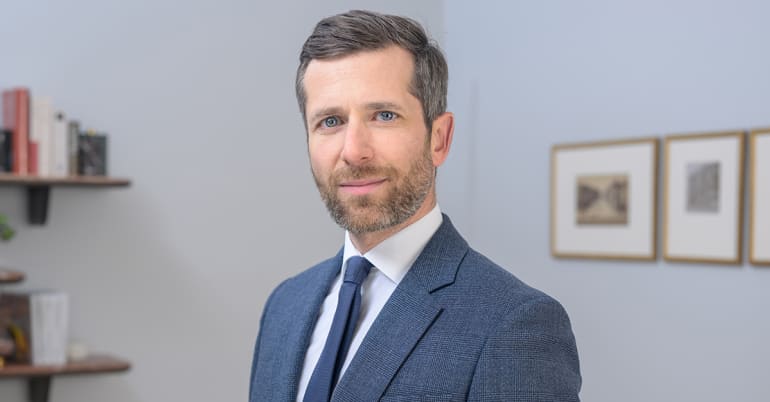
Discussing the future of family wealth was once one of the biggest taboos in the business world. Today, it has become synonymous with survival and transparency. Leading this shift is Xavier Bonna, Managing Partner of Lombard Odier, Geneva's oldest private bank and one of Switzerland's financial pillars since 1796. At the helm of an institution that manages US$455 billion globally, Bonna brings the experience of someone who has recently assumed a leadership position as the sixth generation of his own family to lead the group.
“Succession has always been part of the reality of families and businesses, but today it is a much more widely discussed topic. The younger generation expects greater transparency in the succession process, prompting families to address the subject more openly with the parties involved.”
During a visit to Brazil, a country selected as one of the bank's strategic targets for expansion, Bonna spoke to Broadcast Weekend about how younger generations have transformed wealth management. In his view, the secret to longevity lies not only in financial figures but also in the ability to establish transparent communication channels and untangle the emotional complexities that often surround succession processes. “Families are increasingly willing to discuss the matter openly with the different parties involved in the process and the business,” he says.
The younger generation expects greater transparency in the succession process, prompting families to address the subject more openly with the parties involved
How does Lombard Odier operate?
Lombard Odier is a Swiss private bank founded in 1796. This year, we are celebrating our 230th anniversary. Lombard Odier operates as a fully independent investment institution. We have no publicly traded shares, external shareholders or external debt. The Group has six Managing Partners, who are also its sole shareholders. We currently manage USD 455 billion in client assets through a network of 25 offices worldwide. In Latin America, we have an office in São Paulo. As an investment institution, our focus is on providing clients with expertise and investment mandates.
Which aspect of your role takes up most of your time?
My role today is to be directly on the front lines. Together with clients and prospective clients, we explain what Lombard Odier does and how the bank can contribute to achieving their objectives. Our goal is to expand our market share, particularly in Brazil.
related content.

our wealth management expertise in brazil.
learn more Lombard Odier has a long family history, and you represent the sixth generation. How has this personal journey shaped your perspective on succession and wealth preservation?
At Lombard Odier, our goal is to be the leading wealth management and investment partner for entrepreneurs and their families, from generation to generation. We also aim to help our clients and their families navigate the succession process successfully. I have personally gone through this process recently, having become a Managing Partner representing the sixth generation of my family in this position. My direct experience of assuming a leadership role that has been part of my family's history for generations has helped me better understand the realities faced by many of our clients. I was able to gain firsthand insight into what they experience and the challenges they face, or will face, during this transition. This experience has been valuable both in my day-to-day work and in the way I support our clients.
What has changed most in the way wealthy families approach the transfer of wealth between generations?
Succession has always been part of the reality of families and businesses, but today it is a much more widely discussed topic. The younger generation expects greater transparency in the succession process, prompting families to address the subject more openly with the parties involved. There are also cultural differences between countries and regions, particularly regarding families' willingness to discuss wealth transfers with people outside the immediate family.
Read also: How the next generation is reshaping private banking
What leads a family to approach the bank to discuss succession planning?
It is generally a combination of factors. Age is one of them: families typically do not begin planning succession at 50, but rather at 65 or older. Another trigger may be a specific event, such as a merger or another change in the business, situations that occur frequently among our clients. A lack of alignment between family members' interests can also prompt these discussions and, in some cases, lead to internal conflicts. Usually, it is a specific event or a combination of circumstances that leads a family to address business succession.
What is the biggest mistake families make when postponing discussions about wealth succession?
The main risks are related to insufficient time for planning and the transition process, as well as inadequate preparation of the next generation. When families leave planning until a more advanced stage, the process tends to lack transparency, and the next generation inevitably has less knowledge of the business, which can reduce the chances of a successful succession.
What is the most difficult aspect of succession?
Without a doubt, the aspects related to personal feelings are the most difficult part of succession and wealth planning. Every family is different, just as every succession process is different.
Are families starting this planning process earlier?
I believe succession is no longer such a taboo subject, and families are therefore more willing to discuss it. Every family is different, and I cannot say that they are necessarily starting the planning process earlier. However, based on my experience, families are more open to discussing succession today than they were, for example, ten years ago. There has been progress, and it is a positive development.
I believe succession is no longer such a taboo subject, and families are therefore more willing to discuss it
What are the most common models for heirs' participation in decision-making?
First and foremost, it is a matter of understanding the family's values. This is the foundation of a successful wealth transfer. The approach depends on the family and the heirs themselves. For some families, a more formal approach may be appropriate, involving the sharing of expertise and open discussions about the family's activities, its successes and mistakes, as well as aspects requiring particular attention and caution. For others, a more informal approach may work better. In this case, there may be less discussion about the business itself and greater emphasis on how it is managed and how family members work together. There is no single model that works for every family, and there are many different ways to approach this process.
Where do conflicts typically arise?
Based on our experience, the challenges vary depending on factors such as the generation that will inherit the business. Generally, the smaller the family, the easier it tends to be to achieve a successful succession, although this is not a universal rule. One of the most difficult issues to resolve arises when some family members prioritise their personal interests over the collective objectives of the family and the succession process itself. These disagreements can lead to conflicts and become one of the main challenges to overcome.
During periods of heightened volatility, what is the main challenge in keeping the family aligned, and what can be done to prevent hasty decisions?
Managing volatility requires establishing a risk profile that accounts for both favourable conditions and periods of market stress. To keep the family aligned and avoid hasty decisions, it is important to have an independent professional, someone from outside the family and the business, who can help restore perspective and provide guidance during difficult times. The objective is to remain invested over the long term, rather than trying to time the market by predicting when to enter or exit.



share.