Private assets are going through a challenging phase. Mixed performance, questions around liquidity, the rapid rise of artificial intelligence (AI), and persistent geopolitical tensions have made the landscape difficult to read. Yet, despite the noise, the long-term case for investors remains sound.
It was around this conviction that Lombard Odier experts, private equity managers, and the Chief Commercial Officer of a fast-growing space company gathered at an event at our 1Roof headquarters. The discussion reflected a clear message: in today’s more demanding environment for private assets, diversification can no longer be taken for granted. It must be built deliberately, with discipline, rigour and access to differentiated opportunities.
watch our latest private assets forum replay.
A noisier environment, but fundamentals remain solid
Recent years have been marked by a succession of economic shocks. Interest rate normalisation, a higher cost of capital, and persistent geopolitical tensions have weighed on activity, valuations and the performance of certain segments of private assets.
In today’s more demanding environment for private assets, diversification can no longer be taken for granted. It must be built deliberately
According to Samy Chaar, Partner and Group Chief Economist at Lombard Odier, the global backdrop calls for vigilance, but not disengagement. Global competition for capital expenditure is intensifying, particularly around artificial intelligence, and tensions in the Middle East remain a source of concern. However, at this stage, these risks do not appear to challenge the major economic balances. Crucially, he argues, the private sector is entering this period from a position of relative strength, with balance sheets far stronger than they were 15 years ago. For the economist, the course of action is therefore clear: investors should remain invested, while continuing to “stress test” portfolios against macroeconomic risks.
Performance: short-term pressure, long-term support
Questions around the performance of private assets are understandable. As Daniel Matson, Global Head of Private Assets, points out, the past three years have been more challenging for certain parts of private markets. Private credit, in particular, has come under closer scrutiny.
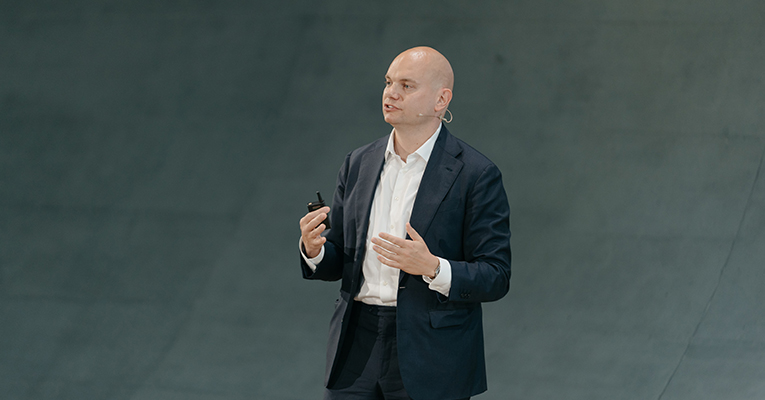
The long-term picture, however, tells a different story. Over time, private assets have continued to deliver returns above listed markets, with the premium particularly evident in Europe1. In private credit, yields are expected to gradually normalise after a period marked by higher interest rates and a significant inflow of non-institutional capital, some of which has since retreated. Importantly no major systemic risk has been identified, at this stage.
A similar observation applies to artificial intelligence. The sector is characterised by intense competition between established technology leaders and new entrants. Here again, selectivity is critical, along with a prudent approach and managers whose experience has been thoroughly tested.
The structural advantage of the mid-market segment
One theme stood at the heart of the discussions: the enduring strength of the “mid-market”, defined as companies generating annual revenues between USD 10 million and USD 300 million. These businesses account for the vast majority of the market and offer significant depth.
For Gonzague Bernard, Head of Investments, Private Assets, the structural advantages of this segment are still too often underestimated. Mid-sized companies can provide more attractive entry points, greater scope for operational value creation, and less dependence on market conditions than their larger peers, which are often waiting for the perfect initial public offering (IPO) window. They are also less exposed to the herd effects that sometimes characterise the most high-profile segments of private equity.
In an environment that has attracted substantial inflows in recent years, avoiding overcrowded strategies has become a genuine driver of performance
As Thierry Célestin, Head of Private Assets, Client Services, notes, performance dispersion between managers is particularly pronounced in this space. Selection is therefore crucial. In an environment that has attracted substantial inflows in recent years, avoiding overcrowded strategies has become a genuine driver of performance. More broadly, diversification is equally critical. The concentration risk of investing in a single private asset fund can be material: the risk of capital loss stands at 24%. By spreading an allocation across five funds, that risk falls to 4%.
Industry and real assets: Atlas Holdings’ counterpoint
Tim Fazio, co-founder and Managing Partner of Atlas Holdings, brought a different perspective to the discussion. Since the 1990s, his approach has been unapologetically industrial. Running counter to many prevailing market trends, Atlas invests in manufacturing businesses, including automotive components, construction, agri-food, metallurgy and energy, often in distressed situations.
Value creation is driven by tangible levers: operational restructuring, talent development and the alignment of interests through employee engagement.
Value creation is driven by tangible levers: operational restructuring, talent development and the alignment of interests through employee engagement. This long-term, hands-on approach, rooted in deep sector expertise, has proven effective across cycles.
His assessment is clear: the massive inflow of capital into private equity has, at times, led some managers to diversify beyond their core areas of expertise, to the detriment of performance. Once again, discipline and expertise make the difference.
Technology and artificial intelligence: prioritising adoption
At the other end of the spectrum, Joseph O’Mara, founder of Aspirity Partners, exemplifies an equally selective technology-focused approach. His fund, ranks among the largest recently raised in Europe in enterprise and financial technologies, having raised EUR 875 million last year. Its thematic strategy is built around long-term structural themes rather than short-term market excitement.
Read also: The Intelligent Allocator: artificial intelligence – revolution guaranteed, returns not included
In artificial intelligence, Aspirity prioritises adoption. The challenge is less about pure innovation than about companies’ ability to integrate AI effectively into their business models, operations and financial systems. Scalable, capital-light business-to-business (B2B) solutions play a central role here. This approach aligns with the view shared by the other stakeholders in the discussion: technology only creates value when it is actually deployed and, integrated.
The space ambitions of Isar Aerospace
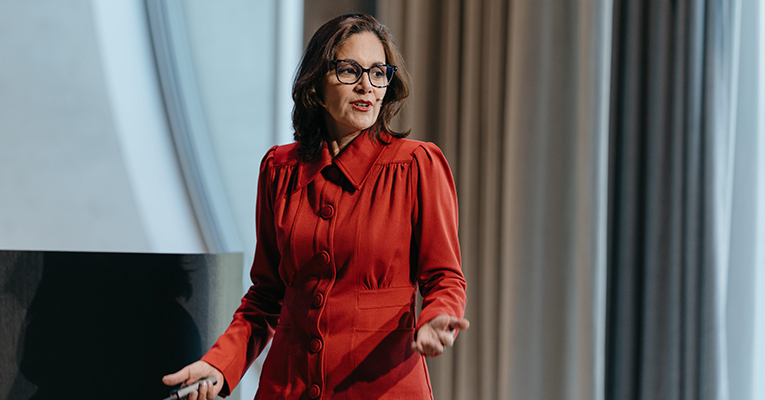
The afternoon concluded with Stella Guillen, Chief Commercial Officer of Isar Aerospace, who opened a window onto a sector still underexplored by investors: space.
A former executive at SpaceX and Arianespace, she highlighted an often-overlooked reality: modern economies increasingly depend on space-based data. The number of satellites in orbit has doubled in just a few years, while planned launches continue to rise sharply, creating a critical shortage of launch capacity that has not kept pace with demand.
Isar Aerospace positions itself precisely at this strategic bottleneck, with launch vehicles designed to place small and medium-sized satellites and satellite constellations into orbit. The company has developed a rigorous industrial approach, insourcing almost every step of the value chain from design to launch in order to ensure reliability and scalability.
The speed of execution is striking: in just eleven months, the company built its own launch pad in Northern Europe
According to Stella Guillen, this allows the company to drastically reduce the journey from development to production, testing, and operation of their launch vehicles. The speed of execution is striking: in just eleven months, the company built its own launch pad in Northern Europe – a record timeframe that underscores both its industrial discipline and its ambition to scale.
The company has raised over EUR 500 million and has a strong order book. It stands as a compelling example of off-the-beaten-track diversification, anchored in strong industrial fundamentals.
Discipline, diversification and bespoke solutions
For Xavier Bonna, Managing Partner of Lombard Odier Group, the approach to private assets is built on three essential pillars: independence, selectivity and alignment with clients’ individual needs. The goal is clear: to generate returns without compromising on risk management.
In this universe, there is no one-size-fits-all solution. Each private asset allocation is tailored to the client’s risk profile, investment horizon, and liquidity constraints.
This is where the role of the private bank becomes central: identifying opportunities, selecting managers and structuring access over time
This is where the role of the private bank becomes central: identifying opportunities, selecting managers and structuring access over time. As Thierry Célestin succinctly puts it, “time in the market beats timing the market”. For private assets, the long term remains one of the strongest drivers of performance.



share.