When you visit our website, information may be stored or recovered on your device, mainly in the form of cookies. We use essential cookies to ensure the website works as it should, and statistical and marketing cookies for audience measurement and content customisation purposes. We rely on Google for statistical and marketing cookies in order to measure website performance and display relevant advertising. For more information on this, please also refer to the Google policy on Business Data Responsibility.
From the Cookie Management Centre, you can set your preferences with respect to the use of cookies: accept or reject certain categories, accept all, or reject all. For detailed information on all cookies used across these three categories, please refer to our Cookie Policy.
Please note that blocking certain cookies may affect your experience and the services offered.
Essential cookies Always active
Essential cookies help the website to work as it should by enabling necessary functionalities, such as navigating between pages and accessing secure areas. These cannot be disabled in our systems.
Statistical cookies
Statistical cookies help us understand how visitors interact with our site by collecting and communicating browsing information. They make it possible to identify the most and least visited pages and to improve the overall performance of the site.
Marketing cookies
Marketing cookies are used to display relevant advertising and measure the performance of campaigns. If you choose not to allow these cookies, you will continue to see ads, but they will be less relevant to your interests.
Choose the purposes for which we may use Google products to collect and use your data:
User storage: to technically permit advertising functionality.
User data for advertising: to optimise our advertising campaigns.
Ad customisation: to tailor advertising to your interests.
Every industrial revolution has triggered fears of mass unemployment, yet history shows new technologies create more work than they destroy
AI is likely to reshape tasks rather than eliminate jobs, with labour market outcomes determined as much by policy and demographics as by technology
Technologies’ creative destruction and financial instability are interlinked. For investors, the inevitability of technological revolutions says little about who sees the returns
We believe that diversification, selectivity and a focus on structural opportunities beyond headlines remain the most robust way to participate in and benefit from the AI transition.
In 1964, US President Lyndon Johnson assembled a committee on the future of work. It included the chairman of International Business Machines (IBM) and the inventor of the Polaroid camera. Its mandate felt urgent; automation was reshaping factories and offices, threatening America’s white-collar workforce. By the time the committee published its report in 1966, US unemployment had fallen from 5.1% to 3.8%. The committee had spent 15 months diagnosing a problem that prosperity fixed.
One of the commission’s findings deserves to be framed on every investor’s wall: “Technology eliminates jobs, not work.” Six decades later, roughly 60% of Americans’ jobs are in occupations that did not exist in 1940. Technology does not only fail to destroy work – it creates new job categories that nobody could have anticipated.
The pattern is consistent across four centuries. During the First Industrial Revolution (roughly 1760 to 1840), the Luddites who started smashing English textile frames in 1811 were not unskilled labourers but the best-paid artisans in their industry. They objected to manufacturers using new machinery to produce inferior goods with cheaper labour. Yet that textile industry became Britain’s biggest employer as cheaper cloth created new markets, new consumers, and new industries.
Sign up for our newsletter
The lesson of industrial revolutions is that displacements are transitional, not permanent. Old and new technologies can coexist for years, even decades, creating space for both policy and investment. The Second Industrial Revolution (approximately 1870 to 1914) produced a counterintuitive economic outcome. The number of horses – the technology that railways were expected to eliminate – multiplied. England’s working horse population peaked in 1901, seven decades after the first track, the Liverpool and Manchester Railway, opened. In the US, the horse and mule population rose sixfold during the railway expansion era. This is because railways created demand for last-mile logistics that only horses could provide. The technology supposed to eliminate the need for horses gave them a new function.
Technology eliminates jobs, not work
Meanwhile, mass electrification brought appliances into American households. In 1900, only 5% of married American women worked outside the home; by 2000, that share was nearly 60%. Household appliances were one significant driver of this shift. Rather than eliminating chores, the washing machine, for example, unlocked workers trapped in unpaid domestic labour. Yet in the 1920's, no-one saw the washing machine as the key to the future American job market.
The Third Industrial Revolution that began around 1950 with mass electronics was supposed to produce a “jobless recovery”. Instead, the number of jobs globally grew by over one billion between 1990 and 2020. The automated teller machine (ATM) is perhaps the best example. When over 400,000 ATMs were installed, the prediction was mass unemployment for bank tellers. Instead, ATMs reduced the cost per branch, banks opened more branches, and tellers were redeployed.
The same pattern is seen with textile looms, horses, and washing machines: automation of one layer of jobs expanded demand at the adjacent layer. The Third Revolution did produce job polarisation as routine middle-skill work eroded, while high-skill and low-wage service work expanded, reshaping income distributions and setting the stage on which the Fourth Industrial Revolution is now unfolding.
The Austrian economist Joseph Schumpeter explained why capitalism is chaotic: it operates through creative destruction, meaning it does not grow by gradually improving what exists, but by replacing it. The railroad made the stagecoach obsolete; the automobile made the horse-drawn carriage a curiosity. Each wave creates enormous wealth but distributes it unevenly and destroys some livelihoods that came before.
This is key for investors. Schumpeter argued that transformative technologies eventually reshape economies and generate extraordinary value. What he leaves out is the pattern provided by history: early disruption systematically breeds capital misallocation and speculative excess. It is precisely in that gap that Schumpeter hands the baton to Hyman Minsky.
Stability itself is destabilising
This gap between the certainty that a technology will transform the world and the uncertainty of who will profit was examined by Minsky. He saw that stability itself is destabilising. When an economy performs well for extended periods, caution gives way to confidence, confidence to optimism, and optimism – left unchecked – to recklessness. This is because success can erode the prudence that made it possible.
Minsky formalised this progression into three stages: first, hedge finance. Borrowers service both interest and principal from cash flows. Today’s artificial intelligence (AI) hyperscalers – Microsoft, Alphabet, Amazon, and Meta – sit here. Their capital expenditure is huge in absolute terms but funded from free cash flows in dominant core businesses. If AI monetisation disappoints, they absorb the loss. Second, speculative finance. Borrowers cover interest but rely on refinancing to repay the principal, anticipating that revenues will eventually catch up. Some large-scale AI strategies now operate here – coherent in design, but dependent on demand materialising at the scale and pace their commitments require. The margin for error is thinner. Third, survival depends on rising asset prices. This is the last and most dangerous stage, which Minsky labelled “Ponzi” finance. The parallel is not of course systemic in AI, but there are start-ups valued at billions with little revenue and sustained by narrative rather than cash flow. When the story works harder than the spreadsheet, Minsky would recognise a pattern.
For AI, the question is not whether the technology is transformative but whether the financial architecture constructed around it can withstand a disappointment in the timeline of returns. Schumpeter would argue that the technology will endure regardless. And Minsky would add that many of the investors funding that transformation will not.
Revolutions create wealth on an extraordinary scale and destroy it remarkably efficiently. A technology may prove transformative, but the investor may still lose everything. The Railway Mania of the 1840s illustrates what happens when private capital loses its sense of proportion. Early lines delivered dividends and investors noticed. By 1845, the Bank of England had cut rates, government bonds offered uninspiring yields, and railway shares could be purchased for a 10% deposit. In 1846 alone, Parliament authorised 263 new companies. By 1848, railway companies accounted for 71% of UK stock market capitalisation. Then the arithmetic reasserted itself. When interest rates rose, share prices halved and a third of planned lines were never built. The irony was that the sceptics were wrong about the technology, and the enthusiasts who financed 90% of Britain’s current railway network were wrong about the investment. The railway revolution was real, but the investors behind it were often ruined.
The question for today’s AI is whether consumers will again favour the convenient bundle over open-ended, do-it-yourself coding
The early US automotive boom saw at least 1,900 carmakers founded. Three have survived. On 30 January 2000, seventeen dot-com companies each spent roughly USD 2.2 million on televised advertisements at the Super Bowl. Within a year, most had gone bankrupt or been sold in fire sales. The internet was transformative. The companies embodying it were mostly not.
Demand can also challenge technologies. Concorde crossed the Atlantic in three and a half hours, but the market wanted cheaper travel, not faster. After three decades, virtual reality remains niche, despite enormous investment. Bitcoin was a solution looking for a problem. Conceived as peer-to-peer electronic cash, it found demand as a speculative asset but its original use as a payment method has failed. For the investor, demand-side failure matters because it cannot be diagnosed by examining the technology itself. The question for today’s AI is whether consumers will again favour the convenient bundle over open-ended, do-it-yourself coding.
Perhaps most instructive for today’s environment is the circularity problem. Japan’s “keiretsu” business network system of the early 1990s created a self-reinforcing loop: banks lent to the network’s companies, who purchased from the network’s suppliers, who made deposits back with the network’s banks. Every firm’s revenue was someone else’s expenditure. For an investor studying today’s AI supply chain, where chipmakers sell to cloud providers who host startups whose valuations depend on their cloud spending, the circularity may look familiar. The collapse of the “keiretsu” system begs a simple question: where does the customer enter the loop?
The fourth revolution
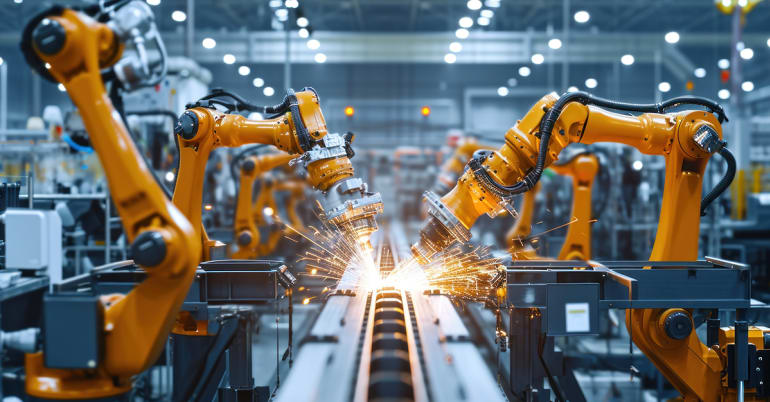
If automation destroyed jobs, the most automated country on earth should be an economic wasteland. South Korea deploys over 100 industrial robots per 1,000 manufacturing workers but unemployment is below 3%. The digital revolution eliminated jobs but also created new ecosystems around new jobs, such as “app developer” or “YouTuber”, that would have been meaningless a generation earlier. Even in occupations directly exposed to digital platforms – such as advertising, material distribution, and travel reservations – employment has remained broadly stable despite post-pandemic volatility, and average US hourly earnings have tracked the national trend. Technology appears to reconfigure tasks within jobs more often than it eliminates the jobs themselves.
Technology appears to reconfigure tasks within jobs more than eliminate the jobs themselves
Will AI create more jobs than it displaces over the coming decade? Two considerations matter. First, AI penetrates non-routine cognitive tasks that previous waves left untouched. Second, even when aggregate employment rises, capital-biased technological change widens inequality and generates political risk – both of which are relevant to portfolio outcomes.
The distinction that may matter most today is what has been labelled the ‘Turing Trap’ – that is using AI to replace workers rather than augment them. A hospital that uses AI to eliminate a radiologist’s position saves one salary. A hospital that gives its radiologists AI tools to read more scans with greater accuracy captures better outcomes, higher throughput, and diagnostic services that were previously unviable. History suggests the largest gains go to those who redesign tasks around humans, not those who take them out of the loop. Microsoft’s Excel spreadsheet did not replace the accountant; but made data analysis so accessible that every business adopted the software.
The story is repeating itself. In early February this year, new AI productivity tools triggered one of the sharpest sector sell-offs in recent memory. The software sector – where revenues are tied to individual licenses – saw stocks plunge by over 30% within weeks amid concerns that AI will destroy white-collar work. Despite AI’s potential to assume certain human tasks, we expect its impact on unemployment to be contained and gradual. AI has greater implications for educated and middle- to upper-middle-income workers, but such individuals tend to possess skills that allow them to pivot as some tasks are automated – or to find alternative occupations as the economy adjusts.
A technology’s inevitability tells us little about its investability
That said, history also cautions that aggregate employment can grow while job quality deteriorates – polarisation, stagnant wages, and widening inequality are not side effects of failed transitions but features of successful ones that policy failed to accompany.
Rather than ask whether jobs will disappear, we should ask where the next wave of demand will come from. Part of the answer may be demographic. America’s Baby Boomer and ‘Silent’ generations hold approximately USD 110 trillion in household wealth – roughly two-thirds of the national total. Healthcare and social assistance in the US will add 2.3 million jobs by 2033, and globally, the World Health Organization projects a shortage of 10 million health workers by 2030. These are precisely the roles AI will struggle to replace, and those that an ageing population will pay for.
Inevitability and investability
AI is undisputably revolutionary. But where is its real risk? Four centuries of technological change suggest that AI will reshape employment, not destroy it. And so, uncomfortably, a technology’s inevitability tells us little about its investability.
Revolutions reward the patient, diversified and contrarian investor – almost never the believer who arrives at the moment of euphoria. Amid the noise, new opportunities are forming. Rather than try to predict how AI will reshape the economy, the intelligent allocator recognises that great transformations tend to deliver their finest returns where no-one thought to look.
CIO Office Viewpoint
The Intelligent Allocator: artificial intelligence – revolution guaranteed, returns not included
This is a marketing communication issued by Bank Lombard Odier & Co Ltd (hereinafter “Lombard Odier”).
It is not intended for distribution, publication, or use in any jurisdiction where such distribution, publication, or use would be unlawful, nor is it aimed at any person or entity to whom it would be unlawful to address such a marketing communication.






share.