When you visit our website, information may be stored or recovered on your device, mainly in the form of cookies. We use essential cookies to ensure the website works as it should, and statistical and marketing cookies for audience measurement and content customisation purposes. We rely on Google for statistical and marketing cookies in order to measure website performance and display relevant advertising. For more information on this, please also refer to the Google policy on Business Data Responsibility.
From the Cookie Management Centre, you can set your preferences with respect to the use of cookies: accept or reject certain categories, accept all, or reject all. For detailed information on all cookies used across these three categories, please refer to our Cookie Policy.
Please note that blocking certain cookies may affect your experience and the services offered.
Essential cookies Always active
Essential cookies help the website to work as it should by enabling necessary functionalities, such as navigating between pages and accessing secure areas. These cannot be disabled in our systems.
Statistical cookies
Statistical cookies help us understand how visitors interact with our site by collecting and communicating browsing information. They make it possible to identify the most and least visited pages and to improve the overall performance of the site.
Marketing cookies
Marketing cookies are used to display relevant advertising and measure the performance of campaigns. If you choose not to allow these cookies, you will continue to see ads, but they will be less relevant to your interests.
Choose the purposes for which we may use Google products to collect and use your data:
User storage: to technically permit advertising functionality.
User data for advertising: to optimise our advertising campaigns.
Ad customisation: to tailor advertising to your interests.
How the next generation is rewriting giving: from legacy to measurable impact
Photo credit: NO.17 Foundation and TPC (Tsao Pao Chee)
As one of the largest intergenerational wealth transfers in history unfolds, philanthropy is becoming an increasingly important expression of purpose, responsibility, and long-term stewardship. While the motivations behind giving remain largely unchanged across generations, the way philanthropy is being practised is evolving.
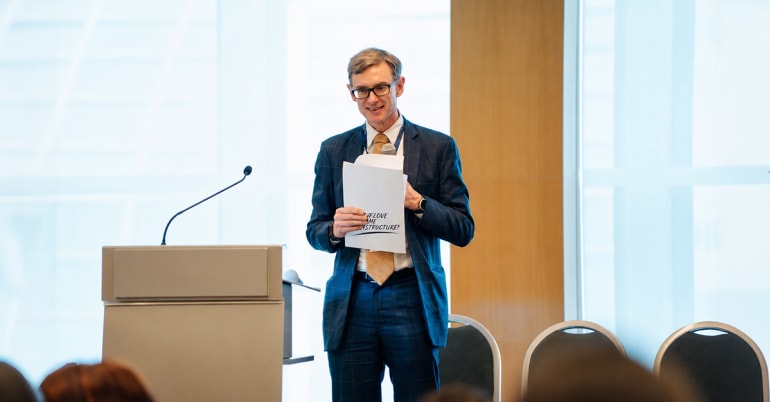
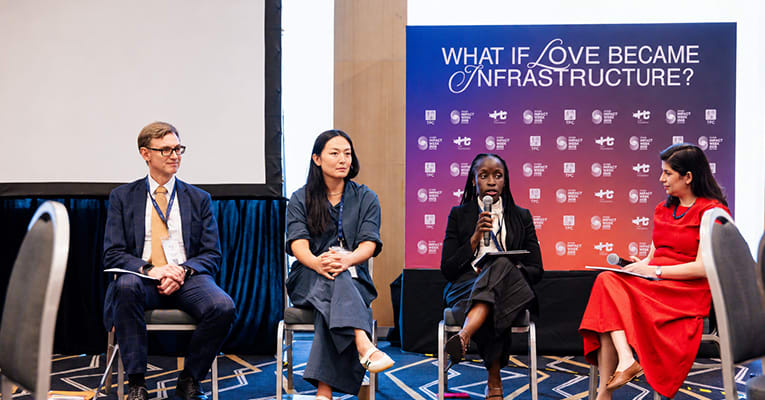
At ONE IMPACT WEEK 2026 in Singapore, Dr Maximilian Martin, Lombard Odier’s Global Head of Philanthropy, was joined for a panel discussion by Sonia Tsao, Co-Founder and Partner at Canopy Generations Fund, and Nicole Campbell, Co-CEO and President of Rockefeller Philanthropy Advisors. Dr Martin shared with the panel how the next generation is bringing a more intentional, impact-focussed, and innovative mindset to social and environmental causes.
Dr Martin’s contributions followed the launch of Lombard Odier’s latest study on next-generation high-net-worth individuals in Switzerland, the UK, the UAE, and Singapore, which found that younger philanthropists remain deeply rooted in family values while embracing new approaches to achieving measurable and lasting impact.
The Next [Gen] Chapter of Philanthropy explores how philanthropists across four major wealth hubs are preparing for the future of giving and how these generational shifts will shape families, governance, and long-term impact. Download the report to access all findings, market-by-market analysis, case studies of prominent philanthropists, and practical insights for families.
One of the study’s insights is that younger philanthropists are not seeking to overhaul the traditions they inherit. Instead, they are building on family legacies while introducing a more structured and outcome-oriented approach to giving.
“The next generation is not planning a revolution, but an evolution,” Dr Martin noted. “What we observed in the study is a strong appetite to innovate and focus on impact, but in ways that honour family values and legacy. In that sense, a reinterpretation of inherited values, and applying them in new ways using today’s philanthropic tools and approaches to create lasting change.”
A defining characteristic of this shift is the growing importance of measurement. Compared with previous generations, younger philanthropists are more likely to prioritise evidence-based approaches and a clearer understanding of how different forms of capital can support the causes they care about.
This reflects broader developments in philanthropy over the past two decades. Frameworks and tools for measuring impact have become increasingly sophisticated and accessible, allowing younger philanthropists to integrate them into their strategies from the outset.
The next generation is not planning a revolution, but an evolution
From left to right: Dr Maximilian Martin, Global Head of Philanthropy, Lombard Odier Group; Sonia Tsao, Co-Founder and Partner, Canopy Generations Fund; Nicole Campbell, Co-CEO and President, Rockefeller Philanthropy Advisors; and moderator Jenaan Lilani, Head of Impact, Family Business Network.
Asia’s distinctive approach to philanthropy
The study also showed how philanthropy is evolving across cultural contexts, particularly in Asia.
Dr Martin shared how Singapore stands out as a compelling example of technology’s influence on the future of giving. Respondents in Singapore showed the strongest interest in using digital philanthropic tools, donor-advised fund platforms, and technology-enabled solutions to manage and deploy capital. This reflects the city-state’s broader reputation as a digitally connected and forward-looking financial centre. The findings suggest that Singapore is emerging as an important hub for next-generation philanthropy, where digital capabilities, entrepreneurial thinking, and wealth stewardship increasingly intersect.
More broadly, the findings suggest that next-generation philanthropists appear to favour flexibility and experimentation. Rather than committing immediately to rigid philanthropic structures, many prefer approaches that allow them to learn, adapt, and refine their strategies over time.
Sonia Tsao, who also took part in the survey, noted that this approach is particularly significant in Asia, where philanthropy has historically been shaped by a broader tradition of stewardship, family values, community ties, and a culture of giving back, rather than being driven by formal institutional philanthropic structures alone. “Younger philanthropists are combining these longstanding traditions with a stronger focus on strategy, innovation, and measurable impact,” she further highlighted.
A defining theme during the panel discussion was the growing recognition that philanthropy should extend beyond traditional grant-making.
Dr Martin highlighted growing interest in using an “entire capital stack” approach to achieve philanthropic goals. Rather than treating philanthropy, investment, and business activities as separate spheres, next-generation wealth holders are increasingly exploring how different forms of capital can work together to support long-term outcomes.
Drawing on her own experience, Sonia Tsao described how this perspective resonates particularly strongly in Asia, where many families continue to maintain close links between their businesses, investments, and community engagement. By drawing on a broad mix of tools to achieve philanthropic goals, families can build a more integrated approach that aligns capital with purpose across multiple areas of family life.
Philanthropy becomes less about individual donations or initiatives and more about deploying resources strategically to generate lasting change.
Singapore is emerging as an important hub for next-generation philanthropy, where digital capabilities, entrepreneurial thinking, and wealth stewardship increasingly intersect
Learning from peers, acting through collaboration
Alongside the evolution of capital, the panel discussion highlighted the growing importance of peer networks.
According to Dr Martin, today’s philanthropists are operating within increasingly interconnected global communities shaped by international education, business interests, and professional experiences. As a result, peer learning emerged as one of the strongest themes across Lombard Odier’s research findings.
Nicole Campbell highlighted how many next-generation philanthropists are looking beyond their immediate communities to learn from other peers tackling similar challenges. “They value platforms that facilitate dialogue, share practical examples, and provide insights into governance, impact measurement, and implementation,” she added.
Collaboration is another emerging priority. Across regional markets, respondents from the study expressed a strong aspiration to work more closely with others, recognising that many of today’s social and environmental issues are too complex to address in silos. However, the research also revealed a gap between ambition and execution, with many respondents acknowledging that meaningful collaboration remains difficult to achieve in practice.
For Dr Martin, this underlines the importance of convening platforms that bring together families, philanthropists, advisors, and practitioners to exchange ideas and accelerate progress.
As Sonia Tsao observed, “Don’t let the tools drive the conversation. Start with the change you want to see in the world and then determine how you are going to make the biggest impact.” She went on to explain that philanthropy, investment, and business capital are “simply different tools that can be deployed in service of that goal.”
Nicole Campbell echoed this perspective, noting that many younger philanthropists are increasingly taking an ecosystem approach by identifying the partners, networks, and forms of capital needed to achieve the outcomes they desire.
Among philanthropic priorities, environmental issues stood out as a growing focus for younger donors. While education, healthcare, and social services remain enduring priorities, rising awareness of climate and environmental challenges is increasingly shaping philanthropic agendas.
For many next-generation donors, the environment is not a standalone issue but one closely connected to economic resilience, community wellbeing, and long-term prosperity. This broader perspective is driving greater interest in solutions that address systemic challenges and create measurable outcomes over time.
That sense of urgency, however, also brings a need for thoughtful and deliberate action. Nicole Campbell emphasised that developing an effective philanthropic strategy means balancing ambition with intentionality. “You have to go slow to go well. That means being intentional, stepping in with a learning mindset, engaging with peers and communities,” she said. “Part of all of this, when you go slow to go well, is to also experiment. The communities that you’re working with, they need you to experiment, they need you to innovate, and they need you to act and to be thoughtful about it.”
Today’s philanthropists are operating within increasingly interconnected global communities shaped by international education, business interests, and professional experiences
A generation defined by responsible opportunity
Looking across the study’s findings, Dr Martin sees a generation characterised by what he describes as a strong sense of responsible opportunity. In Asia, where wealth creation, technological innovation, and pressing social and environmental challenges are unfolding simultaneously, responsibility is often paired with a heightened sense of urgency.
Wealth transfer may be the most visible trend, but it is only part of the story. Equally important is the emergence of a new generation of wealth holders who are seeking to pair inherited values with fresh thinking, and purpose with measurable results. For many, stewardship means ensuring that family principles remain relevant and effective in a rapidly changing world.
The opportunity, therefore, is to expand what stewardship can achieve. By combining long-term perspective with new tools, greater collaboration, and a sharper focus on impact, the next generation of wealth holders can shape a legacy that preserves enduring values while creating new possibilities for lasting change.
This is a marketing communication issued by Bank Lombard Odier & Co Ltd (hereinafter “Lombard Odier”).
It is not intended for distribution, publication, or use in any jurisdiction where such distribution, publication, or use would be unlawful, nor is it aimed at any person or entity to whom it would be unlawful to address such a marketing communication.




share.