When you visit our website, information may be stored or recovered on your device, mainly in the form of cookies. We use essential cookies to ensure the website works as it should, and statistical and marketing cookies for audience measurement and content customisation purposes. We rely on Google for statistical and marketing cookies in order to measure website performance and display relevant advertising. For more information on this, please also refer to the Google policy on Business Data Responsibility.
From the Cookie Management Centre, you can set your preferences with respect to the use of cookies: accept or reject certain categories, accept all, or reject all. For detailed information on all cookies used across these three categories, please refer to our Cookie Policy.
Please note that blocking certain cookies may affect your experience and the services offered.
Essential cookies Always active
Essential cookies help the website to work as it should by enabling necessary functionalities, such as navigating between pages and accessing secure areas. These cannot be disabled in our systems.
Statistical cookies
Statistical cookies help us understand how visitors interact with our site by collecting and communicating browsing information. They make it possible to identify the most and least visited pages and to improve the overall performance of the site.
Marketing cookies
Marketing cookies are used to display relevant advertising and measure the performance of campaigns. If you choose not to allow these cookies, you will continue to see ads, but they will be less relevant to your interests.
Choose the purposes for which we may use Google products to collect and use your data:
User storage: to technically permit advertising functionality.
User data for advertising: to optimise our advertising campaigns.
Ad customisation: to tailor advertising to your interests.
The true cost of fast furniture: why systemic change is essential to building a circular economy
key takeaways.
Approximately 10 million tonnes of furniture waste are generated annually across the EU, straining resources and disposal infrastructure
The transition to a circular economy could unlock opportunities for investors while encouraging businesses to embrace greater resource efficiency
France’s extended producer responsibility framework and innovative recycling technologies demonstrate how regulation and innovation can help recover valuable resources.
Black Friday has become synonymous with consumers' appetite for consumption, with discounts and promotions encouraging millions of consumers to think about what to buy next. Yet amid the excitement of acquiring something new, considerably less attention is given to what happens to the products we already own. From furniture to fashion, electronics, and household appliances, the cycle of purchasing, replacing, and discarding has become increasingly embedded in consumer culture. While Black Friday brings these habits into sharp focus, the challenges extend far beyond a single shopping event. It offers an opportunity to rethink our consumption habits, placing greater emphasis on extending the life of the products we already own through repair, reuse and recycling. By recognising the value of materials beyond their initial use, we can help create an economy in which resources are preserved, waste is reduced, and products are given a new lease of life.
The hidden cost of a throwaway culture
As millions of tonnes of furniture are discarded every year, the environmental and economic consequences of our throwaway culture are becoming increasingly difficult to ignore. From pioneering recycling technologies to new business models, how can systemic change transform waste into value, and what role can investors play in accelerating the transition?
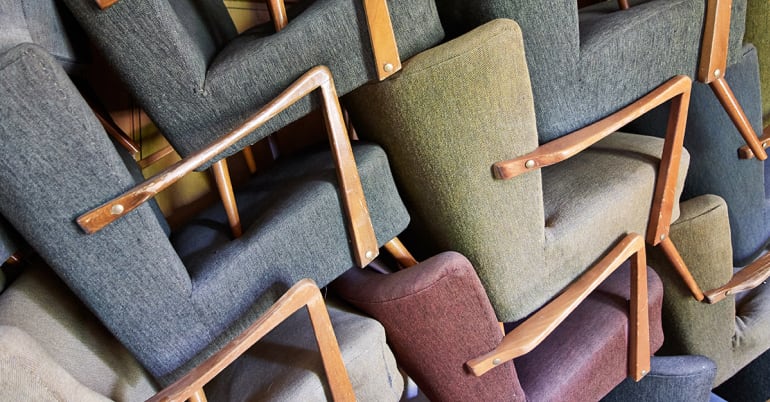
A sofa, a dining table, a wardrobe. Once considered purchases meant to last decades, many household furnishings have become increasingly disposable. The rise of affordable, mass-produced furniture has transformed the way we furnish our homes, making contemporary design more accessible than ever. Yet behind the convenience and attractive prices lies a growing environmental challenge. What happens when furniture designed for affordability, rather than longevity, reaches the end of its useful life?
Across the European Union, approximately 10 million tonnes of furniture waste are generated every year
Across the European Union, approximately 10 million tonnes of furniture waste are generated every year, representing more than 4% of municipal solid waste, according to research published by the European Commission’s Joint Research Centre.1
Sign up for our newsletter
Much of this furniture is difficult to recycle. Composite wood panels, synthetic fabrics, foam, plastics and adhesives are often combined in ways that make separation technically challenging and economically costly. The consequences extend beyond overflowing waste facilities. Every discarded piece of furniture represents lost materials, energy and economic value, and the challenge is part of a much bigger picture. According to the United Nations Environment Programme’s Global Resources Outlook 2024, global natural resource extraction could increase by a further 60% by 2060 compared with 2020 levels.2
As resource consumption grows, so too does the urgency of rethinking how products are designed, manufactured, used and ultimately discarded.
For consumers, the price of furniture is generally determined at the checkout. Yet its true costs extend far beyond the initial purchase. From raw-material extraction and manufacturing to transformation, maintenance, and eventual disposal, every product carries environmental and economic costs after its lifecycle. These costs are not always reflected in the retail price.
In the UK, upholstered furniture presents a particular challenge. According to England’s Environment Agency, discarded sofas and armchairs may contain persistent organic pollutants (POPs), including certain flame retardants, which complicate recycling and require specialist treatment. Furniture containing these substances must be carefully separated from other waste and sent to authorised facilities to ensure harmful chemicals are destroyed rather than released back into the environment.3
From raw-material extraction and manufacturing to transformation, maintenance, and eventual disposal, every product carries environmental and economic costs after its lifecycle
This creates a fundamental economic imbalance. While manufacturers and consumers benefit from lower purchase prices, local authorities and taxpayers can be left bearing substantial disposal costs. It raises a broader question: Should a product’s price reflect its full environmental impact, including what happens after it is discarded?
For Martin Capstick, Managing Director of the North London Waste Authority, greater transparency around these hidden costs could help consumers make more informed choices. “It will be much better if those costs were somehow being part of the overall purchasing decision that people were making,” he explains.
Increasingly, policymakers are seeking to address this imbalance by shifting greater responsibility for end-of-life costs onto producers, an approach already gaining traction in France.
France provides an example of how regulation and industry collaboration can help reshape the economics of waste. Under its extended producer responsibility framework4, manufacturers and retailers help finance the collection, reuse and treatment of products at the end of their lives. The objective is to move beyond a system in which the burden of waste management falls primarily on consumers and taxpayers, towards one that incorporates end-of-life considerations into the commercial value chain. The scale of this approach is significant.
In 2024, Ecomaison, the French state-approved organisation responsible for coordinating collection and treatment across several household product categories, reported receiving EUR 412.6 million in eco-contributions. During the same year, it collected approximately 1.75 million tonnes of products and materials, including 1.47 million tonnes of furniture, through an extensive national collection network.5
“We guarantee to the consumer that 50% of what we have collected will be recycled,” says Éric Weisman-Morel, Director of Recycling Channels, Ecomaision.
According to Ecomaison’s 2024 annual activity report, 44% of materials collected were recycled, 5% were reused, and 48% underwent energy recovery. While energy recovery is distinct from material recycling, these figures illustrate both the progress made and the considerable potential to preserve more materials at high value. Ecomasion has also introduced initiatives to encourage repair and reuse, helping extend product lifespans before they enter the waste stream.
The approach highlights an important principle. Effective circularity requires more than collecting discarded products. It demands an ecosystem connecting producers, consumers, local authorities, repair networks, recyclers and manufacturers.
If regulation can create incentives for change, technological innovation can help turn those incentives into commercial solutions
Innovation: transforming waste into valuable resources
If regulation can create incentives for change, technological innovation can help turn those incentives into commercial solutions. In Bazeilles, eastern France, wood-panel manufacturer Unilin has developed a process designed to recover fibres from discarded medium-density and high-density fibreboard (MDF and HDF), materials commonly used in affordable furniture and laminate flooring. Traditionally, recycling these engineered wood products has been difficult because adhesives bind the fibres together, limiting opportunities for recovering the wood as a secondary raw material. Unilin’s patented Osiris technology uses steam to separate and recover the fibres, enabling their incorporation into new panels.
The company also announced a EUR 20 million investment in its industrial recycling technology, demonstrating how innovation can help create value from materials previously considered difficult to recover.6
“We were able to invent a system that gives us a high-quality recycled fibre at an economically viable rate. To give you an idea, we make roughly 500,000 tons of product here in this factory, and we will have 70,000 tons of injected fibres, of recycled fibres, in the material,” says Bert Vandenkendelaere, President, Unilin Panels.
Beyond recycling: why systemic change matters
Despite growing awareness of the circular economy, the world remains overwhelmingly dependent on virgin resources. According to the Circularity Gap Report 2026, published by Circular Economy and Deloitte, an estimated EUR 25.4 trillion in economic value is lost annually through inefficient resource use, premature disposal and the deterioration of products and assets, equivalent to approximately 31% of global GDP.7 The findings underscore the opportunity to rethink how materials are produced, consumed, and recovered, highlighting why system change, rather than recycling alone, is essential to creating a more circular economy.
For the furniture industry, this requires coordinated change across the entire value chain:
Manufacturers must consider durability, repairability and recyclability from the design stage.
Retailers can develop resale, refurbishment and take-back models.
Governments can create incentives that encourage responsible production and resource efficiency.
Consumers need accessible alternatives that make extending a product’s life practical and affordable.
The financial sector also has an important role to play, supporting the businesses, technologies and infrastructure required to bring these solutions to scale.
Without efficient collection and sorting networks, potentially recyclable products may never reach appropriate processing facilities. Without reliable demand for secondary raw materials, recycling technologies may struggle to become commercially viable. And without better product design, the cost of recovery may remain high. System change requires all these elements to evolve together, creating an economy in which preserving value becomes more attractive than destroying it.
An estimated EUR 25.4 trillion in economic value is lost annually through inefficient resource use, premature disposal and the deterioration of products and assets, equivalent to approximately 31% of global GDP
This transformation is beginning to influence European regulation. The EU’s Ecodesign for Sustainable Products Regulation provides a framework for introducing requirements covering durability, repairability, material efficiency, and product information. Under the European Commission’s 2025-2030 Working Plan, furniture and mattresses have been identified as priority product categories for future ecodesign measures, signalling a shift towards products designed for longer lifespans, easier repair, and more efficient material recovery.8
From a wasteful economy to a circular one
In a circular economy, products are designed to last longer, materials are retained in productive use, and resource efficiency becomes an important driver of economic activity. The implications extend beyond furtniture. Across sectors including construction, fashion, electronics, and packaging, new approaches to product design, material recovery, and business models are challenging traditional patterns of production and consumption.
Companies developing scalable solutions to these challenges may be positioned to benefit from evolving regulation, changing consumer expectations and the growing need for more resilient supply chains. The financial viability of recycling technologies, infrastructure availability, and the quality of recovered materials remain important considerations. Understanding which solution can deliver measurable environmental benefits alongside sustainable commercial returns will be critical.
Ultimately, the transition from a throwaway culture to a circular economy begins with shared responsibility to rethink how we produce, consume and invest, ensuring that fewer resources go to waste and more value is preserved for generations to come.
1 https://circulareconomy.europa.eu/platform/sites/default/files/2024-12/JRC138903_01.pdf 2 wedocs.unep.org/items/3ec5991f-1ab2-4d54-9000-c9d3cee81d16 3 www.gov.uk/guidance/manage-waste-upholstered-domestic-seating-containing-pops 4 https://entreprendre.service-public.gouv.fr/vosdroits/F37937?lang=en 5https://ecomaison.com/rapport/rapport-activite-2024/ 6https://cordis.europa.eu/article/id/453677-making-laminate-flooring-production-circular 7 https://www.deloitte.com/global/en/issues/climate/global-circularity-gap.html 8 European Commission (2025), Ecodesign for Sustainable Products and Energy Labelling Working Plan 2025–2030, COM(2025) 187 final, 16 April 2025.
important information
This is a marketing communication issued by Bank Lombard Odier & Co Ltd (hereinafter “Lombard Odier”).
It is not intended for distribution, publication, or use in any jurisdiction where such distribution, publication, or use would be unlawful, nor is it aimed at any person or entity to whom it would be unlawful to address such a marketing communication.



share.