When you visit our website, information may be stored or recovered on your device, mainly in the form of cookies. We use essential cookies to ensure the website works as it should, and statistical and marketing cookies for audience measurement and content customisation purposes. We rely on Google for statistical and marketing cookies in order to measure website performance and display relevant advertising. For more information on this, please also refer to the Google policy on Business Data Responsibility.
From the Cookie Management Centre, you can set your preferences with respect to the use of cookies: accept or reject certain categories, accept all, or reject all. For detailed information on all cookies used across these three categories, please refer to our Cookie Policy.
Please note that blocking certain cookies may affect your experience and the services offered.
Essential cookies Always active
Essential cookies help the website to work as it should by enabling necessary functionalities, such as navigating between pages and accessing secure areas. These cannot be disabled in our systems.
Statistical cookies
Statistical cookies help us understand how visitors interact with our site by collecting and communicating browsing information. They make it possible to identify the most and least visited pages and to improve the overall performance of the site.
Marketing cookies
Marketing cookies are used to display relevant advertising and measure the performance of campaigns. If you choose not to allow these cookies, you will continue to see ads, but they will be less relevant to your interests.
Choose the purposes for which we may use Google products to collect and use your data:
User storage: to technically permit advertising functionality.
User data for advertising: to optimise our advertising campaigns.
Ad customisation: to tailor advertising to your interests.
The heat is on for Asia-Pacific’s electricity producers
The heatwave currently sweeping western Europe and Asia offers a stark reminder that rising temperatures have serious consequences for humanity – consequences which are particularly acute in Asia-Pacific (APAC).
Around the world, this year’s excessive heat has caused thousands of reported excess deaths, including in France, Belgium1, India2, Thailand3, Australia4, and Korea5.
Such weather, once thought extreme, is becoming common. According to the World Meteorological Organization, 2015-2025 were the hottest 11 years on record6, and Asia is warming almost twice as fast as the global average7.
The cooling conundrum
This year’s heatwaves have exposed a conundrum – our efforts to keep ourselves cool in the short term threaten to exacerbate the long-term problem. As temperatures rise, electricity usage increases, driven by spikes in the use of air conditioning, cooling units, and fans, which are being switched on earlier, turned to higher settings, or kept running for longer.
For example, India’s power consumption jumped nearly 12% in June during the recent heatwave8 – the country has also seen its monsoon season delayed. Meanwhile, power demand in China9 and Vietnam10 has reached record highs because of excessive heat, and soaring electricity demand has caused power cuts in the Philippines11.
This puts increasing pressure on energy systems at a time when governments are trying to find scalable renewable energy solutions that can ensure a constant and secure supply of clean electricity.
To lighten the load on the grid, several APAC countries, including Australia and Japan, have limited the number of days employees can work in the office, and put restrictions on who can drive to work and even when employees can use the elevator12. Many APAC markets have also imposed minimum permitted levels for cooling unit temperatures, to reduce energy use (and save costs)13.
At Lombard Odier, we understand that deep system changes are already transforming markets, the industrial and commercial landscape, and wider society
Long-term systemic solutions required
To break free of this spiral, co-ordinated long-term solutions are required. This is particularly critical in developing Asia, which is most vulnerable to extreme weather events while also at risk of being priced out of scalable solutions.
At Lombard Odier, we understand that deep system changes are already transforming markets, the industrial and commercial landscape, and wider society14. In a world where extreme weather is becoming the norm, these system changes have become critical to averting a global catastrophe – it is essential that the new technologies and economic models that emerge are also made available to the least wealthy parts of the region.
Read more about Malaysia’s carbon initiatives here.
Energy systems
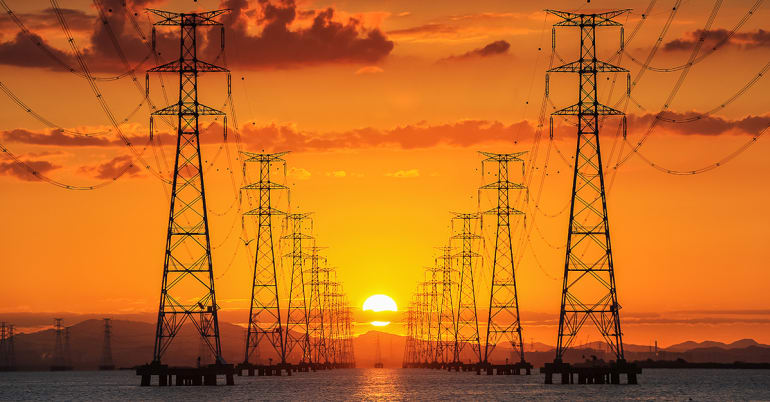
Some have called today’s crisis a failure of infrastructure, and it is easy to see why. In many places, existing pylons, transmission lines, and other grid infrastructure were built for climate models that already appear outdated15.
In their place, we are seeing the emergence of new energy systems built around clean electrification, flexibility, and ‘smartification’, as web-connected power grids optimise the efficiency of electricity production and distribution16.
The increasing power and sophistication of artificial intelligence should provide a catalyst, offering the hope of huge improvements in weather forecasting and electricity usage monitoring, so that power production and distribution can be better matched to demand. We believe it is essential that governments make it easier for the private sector to innovate, including by removing regulatory bottlenecks and encouraging investment.
In tandem with the rise of smart, clean, efficient energy systems, consumer systems must shift to low-impact or even nature-positive supply chains that are more resilient to the escalating threats of climate change-induced extreme weather17.
For example, the global market for air conditioners – which is led by Asia-Pacific – is set to grow significantly in the next 7–10 years, driven by escalating temperatures18. As air conditioning use rises, so, too, will carbon emissions19. It is therefore vital that smart technology is deployed to make AC units cleaner and more energy efficient. In part this can be achieved by running air conditioning using rooftop solar panels – with cooling demand tending to coincide with times of high solar electricity potential, air conditioning and solar panels make an ideal match. However, although this approach reduces grid electricity consumption, it does not address the units’ use of refrigerants to process and emit cool air20.
Faced with the cooling conundrum, regulators and lawmakers across APAC are looking to hold manufacturers more accountable for the energy efficiency of their air conditioning and refrigeration units. However, more needs to be done to give consumers and manufacturers clearer (and stricter) guidelines when it comes to certification. There must also be workable punishments for those flouting rules on energy efficiency or emissions.
We believe it is essential that governments make it easier for the private sector to innovate, including by removing regulatory bottlenecks and encouraging investment
Solutions must be scalable and affordable
The trends are clear. Though heat stress comes in waves, these waves are becoming more frequent and are lasting for longer, threatening the lives of millions of people around the world.
It is essential that large-scale smart grid and clean energy solutions are made affordable and accessible for developing countries, whose vulnerable populations stand to suffer the most from soaring temperatures (the World Bank predicts that nearly 90% of South Asia’s population will be at risk from extreme heat by 203021). Only then will we solve the cooling conundrum, enabling people everywhere to adapt to rising temperatures without locking-in further long-term temperature rises.
[1] France, Belgium rue higher mortality rate in heatwave. Available here.
[2] India is being left to die in the heat. Available here.
[3] Elderly women dies amid extreme heat in Buriram. Available here.
[4] Family from Netherlands calls for change after 27yo dies of suspected heat stroke in remote WA. Available here.
[5] South Korea reports the earliest heat-related death this year on record. Available here.
[6] State of the Global Climate 2025. Available here.
[7] State of the Global Climate 2024. Available here.
[8] India's June power consumption rises 11.6% on heatwave, delayed monsoon. Available here. [9] China was hit by wide-ranging extreme weather events in May. Available here.
[10] Vietnam urges consumers to save power as heatwave drives record demand. Available here.
[11] Power cuts hit million in the Philippines amid grid strain and heatwave. Available here.
[12] Office workers in East Asia sweat it out amid heatwave and energy crisis. Available here.
[13] Middle East war leaves Southeast Asia sweltering indoors. Available here.
[14] The era of economics-led sustainable investing. Available here.
[15] Why China holds part of the answer to Europe's scorching heatwave. Available here.
[16] Energy systems. Available here.
[17] Consumer systems. Available here.
[18] Air conditioner market to reach USD 201.59 billion by 2032, driven by strong demand across Asia-Pacific. Available here.
[19] Rooftop solar can provide five hours of 'free' air conditioning a day. But is it green? Available here.
[20] Rooftop solar can provide five hours of 'free' air conditioning a day. But is it green? Available here.
[21] Bangladesh and other South Asian countries climate resilience will be private sector led. Available here.
important information
This is a marketing communication issued by Bank Lombard Odier & Co Ltd (hereinafter “Lombard Odier”).
It is not intended for distribution, publication, or use in any jurisdiction where such distribution, publication, or use would be unlawful, nor is it aimed at any person or entity to whom it would be unlawful to address such a marketing communication.





share.