When you visit our website, information may be stored or recovered on your device, mainly in the form of cookies. We use essential cookies to ensure the website works as it should, and statistical and marketing cookies for audience measurement and content customisation purposes. We rely on Google for statistical and marketing cookies in order to measure website performance and display relevant advertising. For more information on this, please also refer to the Google policy on Business Data Responsibility.
From the Cookie Management Centre, you can set your preferences with respect to the use of cookies: accept or reject certain categories, accept all, or reject all. For detailed information on all cookies used across these three categories, please refer to our Cookie Policy.
Please note that blocking certain cookies may affect your experience and the services offered.
Essential cookies Always active
Essential cookies help the website to work as it should by enabling necessary functionalities, such as navigating between pages and accessing secure areas. These cannot be disabled in our systems.
Statistical cookies
Statistical cookies help us understand how visitors interact with our site by collecting and communicating browsing information. They make it possible to identify the most and least visited pages and to improve the overall performance of the site.
Marketing cookies
Marketing cookies are used to display relevant advertising and measure the performance of campaigns. If you choose not to allow these cookies, you will continue to see ads, but they will be less relevant to your interests.
Choose the purposes for which we may use Google products to collect and use your data:
User storage: to technically permit advertising functionality.
User data for advertising: to optimise our advertising campaigns.
Ad customisation: to tailor advertising to your interests.
Preventing forest fires – Marc Palahí explains why economic transformation is the only long-term solution
key takeaways.
A shift to a circular economy can redefine our interaction with nature and enhance climate resilience
Lombard Odier’s pioneering strategy invests in sustainable agricultural practices that protect biodiversity and deliver financial returns
Understanding the importance of landscape management and challenging traditional firefighting approaches will be critical in preventing wildfires.
Published in Handelszeitung, 6 February 2025
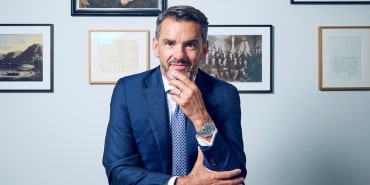
Huge forest fires have been blazing in California this year. Marc Palahí, Scientist and Chief Nature Officer at Lombard Odier Investment Managers (LOIM), explains why, and outlines how this is related to our economic system.
I’d like to talk about the fires in California, which have caused devastation on a vast scale. But can you tell us first about your own expertise? You are Chief Nature Officer at Lombard Odier Investment Managers. That’s an unusual title at a bank – how did you get it?
I am a scientist and spent 25 years working in the scientific field before joining Lombard Odier. My scientific work was always at the interface between business, ecology, biodiversity and climate change. I was head of the European Forest Institute in Bonn for ten years, and my main aim was to develop a science-based operating framework – moving away from an extractive economy founded on fossil commodities, towards a new economic model with a circular approach and that is based on biology.
Our approach is different. We want to invest in nature to reshape the economy, not to make up for its shortcomings
What does the role of Chief Nature Officer involve?
I provide arguments and scientific facts on how we can shift investments in such a way that they become positive for nature. And I make a scientific case that such investments can provide good returns. Let me give you an example: one of the first strategies we are targeting this year deals with implementing nature-friendly solutions to rethink the way we produce food.
Sign up for our newsletter
One of our areas of focus will be coffee. We are providing capital to ensure we can make the transition from coffee monocultures that cause CO₂ emissions and harm biodiversity, to a new form of coffee cultivation using biological rather than synthetic chemical inputs.
There is a whole series of investment companies that invest in emissions certificates and biodiversity credits, for example. That has been the fashionable way of investing in nature. Our approach is different. We want to invest in nature to reshape the economy, not to make up for its shortcomings.
What do you mean when you say, “making up for the shortcomings of the economy?”
Let me give you an example: if a company that procures chocolate from Ghana and Côte d’Ivoire buys emissions certificates, that doesn’t help fix the problems that cocoa farms are facing, including their lack of resilience. So we need to invest in the farms.
We need to create an entirely new economy that is resistant to climate change and also contributes to stemming climate change by transitioning from fossil fuels to renewable energy
You’ve mentioned that you used to head up the European Forest Institute. The forest fires in California have been all over the headlines in recent weeks. What can be done from an economic perspective to prevent disasters like this?
Major forest fires like these are the result of winds, structural drought and poor urban planning. The economy is already paying the price. We need to create an entirely new economy that is resistant to climate change – and also contributes to stemming climate change – by transitioning from fossil fuels to renewable energy. This change needs to take place across all sectors. It’s not just a matter of changing energy systems; it’s also about switching from concrete and steel to biological materials, and from synthetic agriculture – using artificial fertilisers and pesticides – to a form that is regenerative.
This is a paradigm shift, a change in the way we think about building our cities – using green infrastructure, not grey. It’s not about fixing any one industry in particular. It’s about rethinking our entire economy as it relates to nature, and about understanding the ecology of our planet.
What is the short-term solution to prevent this situation from happening again next year?
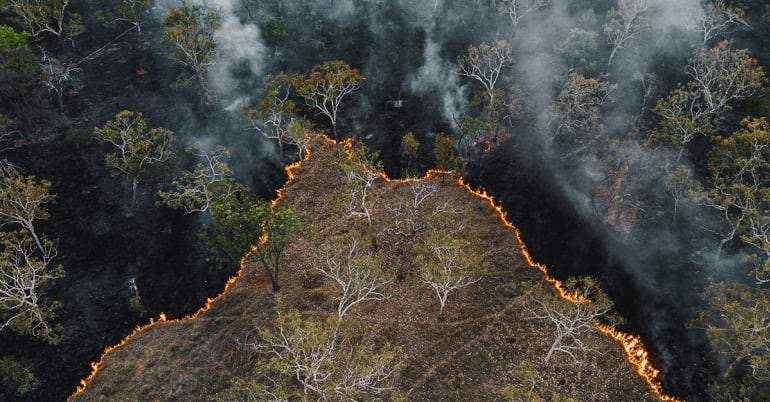
When it comes to problems like forest fires, the best short-term solution is the long-term one. One of the problems we’ve seen in places like California, Spain, Italy and Portugal is that we have been investing mainly in fighting fires, not preventing fires.
If you invest too much in fighting fires you create an even bigger problem, because you can then be very effective at stopping low-intensity fires. But by suppressing these small fires, large amounts of combustible material accumulate in unmanaged landscapes. Then when you have a bad year, like this year, with strong winds and a severe drought, the fires are unstoppable.
We have reached a turning point in our economic system where there are no more quick fixes. We need structural change
So there’s no quick and easy solution?
No. You know, the problem is that we are caught in a vicious circle: the quick solution for California will be to increase the budget for firefighting next year – but that’s not going to fix the problem. Maybe the authorities will be able to stop fires next year, but the problem will keep constantly getting worse.
We have reached a turning point in our economic system where there are no more quick fixes. We need structural change.
important information
This is a marketing communication issued by Bank Lombard Odier & Co Ltd (hereinafter “Lombard Odier”).
It is not intended for distribution, publication, or use in any jurisdiction where such distribution, publication, or use would be unlawful, nor is it aimed at any person or entity to whom it would be unlawful to address such a marketing communication.

share.