When you visit our website, information may be stored or recovered on your device, mainly in the form of cookies. We use essential cookies to ensure the website works as it should, and statistical and marketing cookies for audience measurement and content customisation purposes. We rely on Google for statistical and marketing cookies in order to measure website performance and display relevant advertising. For more information on this, please also refer to the Google policy on Business Data Responsibility.
From the Cookie Management Centre, you can set your preferences with respect to the use of cookies: accept or reject certain categories, accept all, or reject all. For detailed information on all cookies used across these three categories, please refer to our Cookie Policy.
Please note that blocking certain cookies may affect your experience and the services offered.
Essential cookies Always active
Essential cookies help the website to work as it should by enabling necessary functionalities, such as navigating between pages and accessing secure areas. These cannot be disabled in our systems.
Statistical cookies
Statistical cookies help us understand how visitors interact with our site by collecting and communicating browsing information. They make it possible to identify the most and least visited pages and to improve the overall performance of the site.
Marketing cookies
Marketing cookies are used to display relevant advertising and measure the performance of campaigns. If you choose not to allow these cookies, you will continue to see ads, but they will be less relevant to your interests.
Choose the purposes for which we may use Google products to collect and use your data:
User storage: to technically permit advertising functionality.
User data for advertising: to optimise our advertising campaigns.
Ad customisation: to tailor advertising to your interests.
Article first published in Asian Private Banker on 22 July 2026 here
Asia’s wealthy are beginning to invest more like their European counterparts, as geopolitical uncertainty, market volatility and the maturation of family wealth push investors beyond short-term trading towards longer-term portfolio construction, according to Lombard Odier.
While Asian investors have traditionally been known for their willingness to seize market dislocations and pursue tactical opportunities, the Swiss private bank said it is seeing clients increasingly balance that instinct with a greater emphasis on diversification, asset allocation and portfolio resilience.
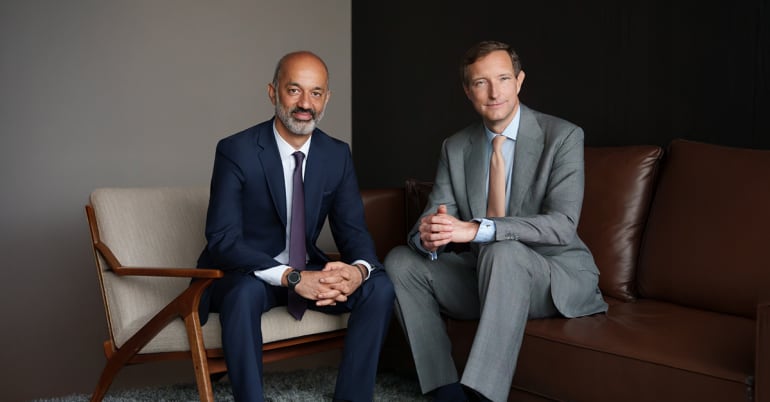
“Whenever you have market volatility, whatever the trigger may be, the first reaction of most Asian clients is to look for opportunities,” said Omar Shokur, regional head for Asia, private clients, Lombard Odier.
“Asian clients have always liked the idea that volatility means something might drop, something that had been too expensive could suddenly become an interesting entry point,” he told Asian Private Banker.
He said that mindset remains intact, with periods of market stress often creating opportunities in products such as structured investments that offer higher coupons.
However, Shokur said clients are increasingly stepping back to assess how prolonged periods of uncertainty could affect their overall portfolios rather than focusing solely on the trade of the day.
“It’s not only a question of cautiousness,” he explained. “It’s about looking at the portfolio in a more medium-term manner and asking whether it is robust enough to navigate the next few weeks or months if conditions stay like this.”
Rather than reacting to every market move, advisors are encouraging clients to “read through the noise” and determine whether action is necessary at all.
“Sometimes there is no trade to make because that’s what’s best for the portfolio over the longer term,” Shokur said.
Asia’s wealthy are beginning to invest more like their European counterparts, as geopolitical uncertainty, market volatility and the maturation of family wealth push investors beyond short-term trading towards longer-term portfolio construction, according to Lombard Odier
Instead of replacing one investment style with another, Lombard Odier believes Asia’s wealthy are increasingly combining both approaches.
Historically, Asian private banking has been characterised by concentrated portfolios, product-led conversations and active trading, while European investors have generally favoured diversified portfolios built around long-term strategic asset allocation.
Today, Shokur said many Asian clients are beginning to embrace elements of both models. Some clients may allocate 20% to one approach and 80% to the other, while others split it 50-50.
“What I realise more and more in Asia is that we often describe the Asian model as transactional and product-oriented, and contrast that with a European model built around long-term asset allocation,” he said.
“But today in Asia there is increasing coexistence between those two models within the same client.”
The changing client mindset is also reshaping the role of private banks
Frederic Rochat, managing partner at Lombard Odier, sees the shift as also being driven by broader changes in the global landscape.
He said entrepreneurs are increasingly applying the same resilience strategies that governments are adopting amid geopolitical fragmentation to the organisation of their own wealth.
“We are moving from a world of open globalisation to one of friend-shoring and near-shoring,” Rochat told APB.
“What is interesting is that many entrepreneurs and their families are applying the same logic to the organisation of their wealth.”
That has prompted more families to reassess where they live, how their wealth is structured, where assets are booked and whether their portfolios remain sufficiently diversified for a more uncertain world.
The evolution is particularly evident as Asia’s first generation of self-made entrepreneurs begin transferring wealth to subsequent generations.
Rochat said founders typically approached investing in much the same way they built their businesses — actively, opportunistically and with a focus on growth. As wealth passes to second- and third-generation family members, conversations naturally shift towards preservation, governance and long-term portfolio resilience.
“As soon as you move to the second and third generation, the discussion moves more towards the preservation of wealth,” he said. “Naturally they become more similar to the European way of thinking.”
Discover key findings about wealth planning and succession for Asia-Pacific investors in our 2026 APAC High-Net-Worth Individuals Study here.
Beyond products
The changing client mindset is also reshaping the role of private banks.
Rather than beginning discussions with investment ideas or individual products, both executives said advisors are spending more time helping families define long-term objectives before constructing portfolios.
“We do not begin by asking what we can sell or what trade we can execute today,” Rochat explained.
“We begin by asking how we can help, what the family wants to achieve with its wealth, and then we spend time together defining the right asset allocation.”
For some clients, he said, that process can involve workshops lasting one or even two days before investment decisions are made.
“We don’t think there is such a thing as over-diversification or under-diversification. Nor do we think there is a single right or wrong approach. Every family is unique. They all have different goals, different risk tolerances and different preferences for liquid and illiquid assets,” Shokur concluded.
Lombard Odier managed US$283 billion in assets at the end of 2025. The bank does not disclose its Asia AUM.
Source: Asian Private Banker. Permission required for reproduction.





share.