When you visit our website, information may be stored or recovered on your device, mainly in the form of cookies. We use essential cookies to ensure the website works as it should, and statistical and marketing cookies for audience measurement and content customisation purposes. We rely on Google for statistical and marketing cookies in order to measure website performance and display relevant advertising. For more information on this, please also refer to the Google policy on Business Data Responsibility.
From the Cookie Management Centre, you can set your preferences with respect to the use of cookies: accept or reject certain categories, accept all, or reject all. For detailed information on all cookies used across these three categories, please refer to our Cookie Policy.
Please note that blocking certain cookies may affect your experience and the services offered.
Essential cookies Always active
Essential cookies help the website to work as it should by enabling necessary functionalities, such as navigating between pages and accessing secure areas. These cannot be disabled in our systems.
Statistical cookies
Statistical cookies help us understand how visitors interact with our site by collecting and communicating browsing information. They make it possible to identify the most and least visited pages and to improve the overall performance of the site.
Marketing cookies
Marketing cookies are used to display relevant advertising and measure the performance of campaigns. If you choose not to allow these cookies, you will continue to see ads, but they will be less relevant to your interests.
Choose the purposes for which we may use Google products to collect and use your data:
User storage: to technically permit advertising functionality.
User data for advertising: to optimise our advertising campaigns.
Ad customisation: to tailor advertising to your interests.
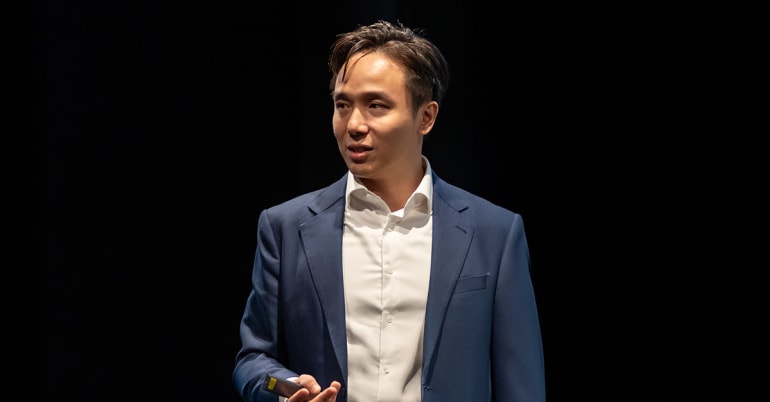
From performance to continuity: Jack Siu on Lombard Odier’s team-based DPM model in Asia
Article first published in Hubbis on 10 June here.
As Asia’s private wealth market matures, discretionary portfolio management (DPM) is becoming a more important part of how families think about performance, succession, governance, and long-term capital preservation. For Jack Siu, Head of Discretionary Portfolio Management, Asia at Lombard Odier, the next phase of DPM growth will be shaped not only by investment returns, but by alignment, institutional-quality portfolio construction, cross-border structuring capability, and the ability to support families as wealth passes from one generation to the next.
key takeaways.
Lombard Odier’s structure supports long-term alignment: Siu points to the bank’s 230-year history, family partner ownership, AA- rating, strong capital ratio, and specialist focus on wealth and asset management as core parts of its proposition
DPM is becoming more relevant as Asian wealth transfers between generations: As entrepreneurs age, step back from active investment decision-making, and prepare wealth for the next generation, discretionary services are becoming more important
The bank sees DPM as a core service, not an add-on: Siu distinguishes Lombard Odier’s model from firms that treat DPM as one more offering within a broader product shelf
Team-based investment infrastructure is a major differentiator: Siu describes Lombard Odier’s investment office to a high-precision and sophisticated investment engine, where specialists across asset classes, regions, macro, geopolitics, private assets and portfolio construction each play defined roles
Complex families require more than annual performance: For Siu, discretionary portfolios must account for purpose, succession, tax efficiency, jurisdictional complexity, investment format, and the needs of future generations
Hong Kong’s wealth market is becoming more mature: Siu sees the city moving beyond a model dominated by IPOs, stock trading and product distribution towards longer-term wealth management and more bespoke investment services
The future of DPM in Asia will be tied to succession: As wealth moves to second, third and fourth generations, Siu expects discretionary services to play a larger role in preserving investment discipline and continuity
AI is becoming part of the investment toolkit, but judgement remains essential: Siu uses multiple AI tools across languages and content types, but stresses the importance of cross-checking because AI can produce inaccurate conclusions.
Lombard Odier’s value proposition begins with its structure. The Geneva-headquartered private bank is 230 years old, owned by six managing partners, and focused on wealth and asset management rather than universal banking. For Siu, that matters because it shapes how the bank thinks about clients, investment performance, risk, and continuity.
“We are a 230-year bank owned by six managing partners,” he says. “We have been through more than 40 financial crises, we are AA- rated, with a capital ratio of around 32%. From a safety standpoint, we are one of the safest banks in the world.”
That safety profile is not only a balance sheet point. In private wealth, Siu argues, clients want to know that the institution holding their wealth is stable, well capitalised, and aligned with them through market cycles. The bank’s model, he says, is designed to give clients confidence during normal conditions and periods of market stress.
Lombard Odier’s independence is central to that proposition. Because the bank is not listed, Siu says it does not face the same quarterly revenue pressure as many listed financial institutions. That allows it to focus on long-term performance and the continuation of client wealth across generations.
“When we talk about performance, we are not a universal bank and we are not listed,” he says. “That means we do not have the short-term pressure to generate immediate revenues. We can focus on long-term performance and the continuation of wealth for our clients.”
Siu also sees the bank’s new Geneva headquarters as a statement of long-term intent. The building, he says, reflects sustainability, innovation, and a readiness for the next stage of the bank’s development.
“The new headquarters is not only sustainable,” he says. “It is designed for the future. It says that we are here to stay, and that we are ready for the next century.”
We have been through more than 40 financial crises, we are AA- rated, with a capital ratio of around 32%. From a safety standpoint, we are one of the safest banks in the world
From Investment Performance to Wealth Continuity
For Siu, DPM in Asia is becoming more important because the region’s private wealth landscape is changing. Many first-generation entrepreneurs have created significant wealth and are now reaching a point where they are becoming less hands-on. Some are preparing for retirement. Others are beginning to think seriously about how wealth should be managed for children and grandchildren.
That transition changes the role of discretionary services. The founder may have built wealth through business ownership and personal conviction, but the next generation may not have the same investment focus, expertise, or appetite for active portfolio management.
“I think the DPM business has always been a business most banks want to grow,” Siu says. “But Asia is now reaching the stage where money is being passed on to the second, third and fourth generation. Entrepreneurs are beginning to enjoy retirement, become less hands-on, or pass wealth to the next generation.”
This is where discretionary services become more than an investment mandate. They can provide continuity when the founder is no longer making every portfolio decision directly. They can also help families maintain professional discipline across generations.
For Siu, the role of DPM is closely linked to succession. It is not only about portfolio performance in a given year, but about ensuring that wealth can continue to be managed in a structured, professional and purposeful way as family circumstances change.
DPM as a Core Service
As discretionary services become more popular in Asia, Siu expects more banks and wealth managers to build DPM capabilities. But he draws a clear distinction between firms that add DPM as another service and firms that make it central to their investment proposition.
“The difference between players is whether you are building the service as part of your offering, or whether you are really focussed on delivering it as a main service to clients,” he says. “The latter is what we do.”
The distinction matters because the model determines the outcome. If DPM is treated mainly as another product, it can become an extension of fund distribution or portfolio packaging. If it is treated as a core service, it needs stronger investment infrastructure, clearer accountability, and full alignment with client objectives.
Siu says Lombard Odier’s model is supported by the bank’s ownership structure and investment focus. The absence of listed-company pressure allows bankers and investment professionals to think more directly about long-term wealth build-up and the needs of the next generation.
“We have the luxury of not being a listed company,” he says. “That allows our bankers to be more aligned with clients around the long-term build-up of wealth, their needs and the needs of the next generation.”
That alignment is particularly important for families with cross-border lives and multi-generational needs. In those cases, the purpose of the portfolio must be defined before the investment solution can be properly built.
A precision investment engine
Siu describes Lombard Odier’s investment model through a high precision investment engine analogy. A high-end and sophisticated team does not rely on one person doing every job. It has a leader, a process, and specialists responsible for different parts of the final outcome. For Lombard Odier, that leader is Michael Strobaek, the bank’s Global Chief Investment Officer, supported by specialists across asset classes, regions, macro strategy, geopolitics, commodities, private assets, hedge funds, portfolio construction and asset allocation.
That investment focus is reflected in the scale of the team. Siu points to Lombard Odier’s presence across 25 locations and more than 300 investment professionals within a bank of around 3,000 people, giving the investment function significant weight within the organisation.
The analogy captures how Siu sees Lombard Odier’s differentiation. The bank does not try to replicate the same investment function in every location. Instead, it connects specialists through a formal process, so that different areas of expertise feed into discretionary mandates and advisory portfolios.
That structure is different from a model where one person or a localised team tries to do everything. Siu compares that less developed model to an Asian investor who invest in both US and European assets, forecasts their currency outlook, and manages the client relationship at the same time. Lombard Odier’s model is designed to operate with a more specialised division of labour.
“We organise ourselves so that the experts are linked together in a process,” he says. “That process is designed to deliver top-tier performance and service of discretionary mandates and advisory portfolios to clients.”
For Siu, this team-based infrastructure is one of the key reasons the bank has been recognised by industry award bodies for its CIO office and DPM proposition. The strength of the model lies not only in market views, but in the ability to translate those views into portfolios that clients can understand and use, and that reflect their needs and objectives.
The needs of Asian private clients are becoming more complex. Families may have members in Hong Kong, Singapore, Thailand, Australia, Europe, or elsewhere. Assets may be held through different vehicles. Family members may have different tax residences. The portfolio may need to serve different purposes for different generations.
For Siu, this is where DPM must move beyond a standardised performance product. The portfolio needs to reflect the family’s structure, tax position, currency needs, investment horizon and succession objectives.
“The purpose of the portfolio is very important,” he says. “It is not only about good performance. You need to understand whether family members are in different tax jurisdictions, and whether you have the capability to serve them in a tax-efficient way.”
The investment toolkit also matters. Some families may need single securities. Others may need investment funds. Some may need private fund structures that can be held through trusts. The right format depends on the client’s broader wealth architecture.
“We have evolved to the stage where we can serve complex family structures with global residential needs,” he says. “We can think about how to serve them in a tax-efficient way, and how to build solutions in different formats.”
This is why Siu sees DPM as part of wealth continuity rather than only portfolio management. As families become more global and succession becomes more immediate, discretionary mandates need to support the wider family structure.
Clients come here for what we are best at - but we can also adapt it to their needs and preferences. That is how private wealth should be
A More Mature Asian Wealth Market
Siu sees Asia’s DPM growth as part of a wider industry transition. In Europe and other older wealth markets, discretionary services became more common as wealth aged and passed down several generations. Asia is now moving through a similar phase.
That does not mean all clients will move at the same speed. Many Asian investors remain highly engaged in markets and continue to value direct investment ideas. But Siu sees the structural direction as clear. As wealth grows older, more families will need professionalised investment governance.
This is particularly relevant in Hong Kong. Siu says the city has historically been known for stock trading, IPO activity and transactional investing. That culture remains part of the market, but he believes Hong Kong is becoming more mature as a wealth management centre.
“Hong Kong was known for stock trading and the IPO market,” he says. “But it is evolving. People care more about long-term investment and the sustainability of investments. They are becoming more mature in how they invest and in the tools they use.”
For Lombard Odier, this shift supports the case for a more specialist proposition. Siu does not see the next stage of wealth management as a race to become the largest platform or the cheapest distributor. He sees it as a shift towards more thoughtful, tailored and durable investment services.
Read more about our inaugural Euromoney win for Asia’s Best for DPM here.
Key Priorities
Lombard Odier’s priorities in Asia are shaped by the continued growth of discretionary portfolio management and the need to keep strengthening the investment process behind it.
Siu says the bank has invested in its team and expanded its investment capabilities over recent years. The arrival of Michael Strobaek as Global CIO is part of that story. For Siu, Lombard Odier has been able to combine the discipline of its own long-standing private banking history with investment processes developed by senior professionals in previous institutional roles.
“We have taken the best of both worlds,” he says. “Clients benefit from the process of a 230-year-old institution, alongside capabilities developed by the team over the past decade.”
The first priority is to continuously strengthen that process. Siu says the bank wants to remain among the leading CIO offices and DPM providers globally, which requires constant development rather than reliance on past recognition.
The second priority is performance. That includes single-asset-class portfolios, multi-asset-class portfolios, asset allocation, and the broader construction of discretionary mandates. Performance remains central, but Siu also stresses that it must be supported by strong communication and investment content.
“To remain in that category, you have to continue to deliver performance,” he says. “That means performance from single-asset-class portfolios, multi-asset-class portfolios, asset allocation, and investment content that people can understand.”
The third priority is regional momentum. Lombard Odier wants to continue sharing its investment story across Asia and build stronger recognition for its DPM proposition. As more families face succession, cross-border complexity and intergenerational planning needs, Siu sees discretionary services as an increasingly important part of the bank’s role.
“We are very focused on continuing to improve the process and taking it to the next level,” he says. “The plan is to continue the current momentum and create stronger momentum in discretionary services.”
Read why Lombard Odier is the private bank of choice for wealthy families in the region here.
Siu sees Hong Kong’s wealth management market entering a more mature phase. The city is making a comeback as a financial centre, but the nature of its wealth industry is also changing.
For many years, Hong Kong was closely associated with stock trading, IPOs and single-security activity. Siu believes that model is evolving as clients become more focussed on long-term investment, sustainability of returns, portfolio construction and the quality of the wealth management service itself.
“Hong Kong was known for stock trading and the IPO market,” he says. “But it is evolving. People care more about long-term investment and the sustainability of investments.”
That evolution should change how wealth managers compete. Siu is cautious about models that focus too heavily on price competition, fund distribution margins, or platform breadth. He believes the next decade will require firms to serve the specific needs of UHNW Individuals, families and institutional capital with greater depth.
“The next decade is about the ability to serve the dedicated needs of very wealthy individuals and institutional money,” he says. “It should not just be about fighting over prices or becoming a supermarket.”
For Lombard Odier, the future lies in remaining specialist and distinctive. The bank should know its signature offering, while retaining the flexibility to tailor it to individual client’s needs.
“Clients come here for what we are best at,” he says. “But we can also adapt it to their needs and preferences. That is how private wealth should be.”
In practical terms, that means building portfolios around family purpose, tax efficiency, jurisdictional complexity, investment horizon, liquidity needs and generational transition. As wealth passes to second, third, and fourth generations, Siu expects DPM to become more important as a way to preserve discipline and continuity.
The future of discretionary portfolio management in Asia, in his view, is not only about managing money. It is about helping families maintain professional investment governance as the original wealth creators become less hands-on and the next generation takes on greater responsibility.
Source: Hubbis. Permission required for reproduction.
important information
This is a marketing communication issued by Bank Lombard Odier & Co Ltd (hereinafter “Lombard Odier”).
It is not intended for distribution, publication, or use in any jurisdiction where such distribution, publication, or use would be unlawful, nor is it aimed at any person or entity to whom it would be unlawful to address such a marketing communication.


share.