When you visit our website, information may be stored or recovered on your device, mainly in the form of cookies. We use essential cookies to ensure the website works as it should, and statistical and marketing cookies for audience measurement and content customisation purposes. We rely on Google for statistical and marketing cookies in order to measure website performance and display relevant advertising. For more information on this, please also refer to the Google policy on Business Data Responsibility.
From the Cookie Management Centre, you can set your preferences with respect to the use of cookies: accept or reject certain categories, accept all, or reject all. For detailed information on all cookies used across these three categories, please refer to our Cookie Policy.
Please note that blocking certain cookies may affect your experience and the services offered.
Essential cookies Always active
Essential cookies help the website to work as it should by enabling necessary functionalities, such as navigating between pages and accessing secure areas. These cannot be disabled in our systems.
Statistical cookies
Statistical cookies help us understand how visitors interact with our site by collecting and communicating browsing information. They make it possible to identify the most and least visited pages and to improve the overall performance of the site.
Marketing cookies
Marketing cookies are used to display relevant advertising and measure the performance of campaigns. If you choose not to allow these cookies, you will continue to see ads, but they will be less relevant to your interests.
Choose the purposes for which we may use Google products to collect and use your data:
User storage: to technically permit advertising functionality.
User data for advertising: to optimise our advertising campaigns.
Ad customisation: to tailor advertising to your interests.
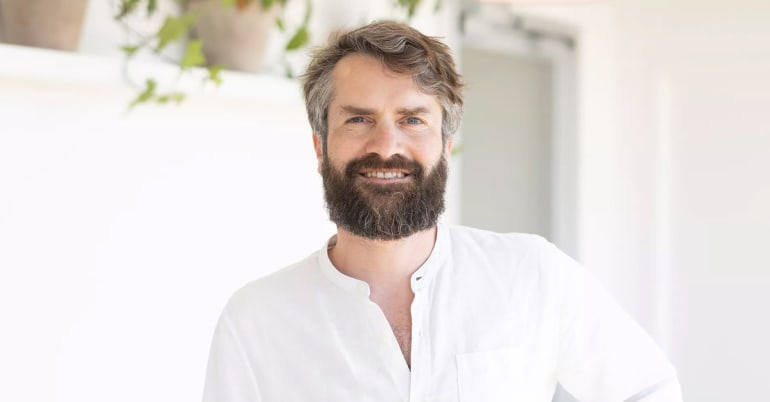
Reinventing healthcare with technology: an interview with Charles Gorintin, co-founder of insurtech unicorn Alan
key takeaways.
For Charles Gorintin, healthcare is a common good that should be made as simple, transparent, and accessible as possible using technology, so as to free up doctors’ time and democratise prevention
Alan relies on health insurance to integrate the entire value chain, simplify financial flows, and invest in innovative solutions
Transparency, shared responsibility, and use of AI as a collective memory allow Alan to innovate rapidly while still retaining the human touch in the relationship between caregiver and patient.
Article published in “Entrepreneur's Voice” in partnership with Le Figaro on 1 December 2025
The healthcare landscape is undergoing major transformation, and Alan is emerging as one of the most innovative players in French Tech. Co-founder Charles Gorintin reflects on the company’s guiding vision: using technology to simplify access to care, reinvent prevention, and put the human first.
What drove your interest in the healthcare sector, that you made it the focus for launching your business?
Charles Gorintin: Healthcare is something that affects us all in a way which is deeply personal. I grew up believing that access to care shapes our ability to live, work, flourish, and take care of our loved ones. But it was also obvious that the system was extremely dysfunctional, with complex pathways, opaque tariffs, and unequal access. My partner Jean-Charles Samuelian-Werve and I both firmly believe that technology can simplify healthcare and run it in a way that is more people-focussed. By freeing up doctors’ time, democratising prevention and making the system more fit for purpose we want to remind everyone that healthcare is not a market to be conquered but a common good to be reinvented.
Why did you pick health insurance as your starting point? What was that market lacking, in your view?
The real challenge when it comes to innovating in healthcare is the economic model. Lots of companies have great ideas, but bump up against the issue of finance and get caught between budgetary restrictions, rigid reimbursement rules, and entrenched habits. We picked health insurance as a way of integrating the entire value chain and simplifying financial flows. We became an aggregator and decided to reimburse video consultations, treatment, and prevention, and we invest in innovative solutions that are aligned with what our members want: people who are healthier and companies delivering a better performance.
The real challenge when it comes to innovating in healthcare is the economic model. Lots of companies have great ideas, but bump up against the issue of finance… Controlling the financing allows us to experiment and innovate. Where traditional insurers optimise their margins, we put the business model at the service of innovation in healthcare, rather than the other way round
It’s a unique position. Controlling the financing allows us to experiment and innovate. Where traditional insurers optimise their margins, we put the business model at the service of innovation in healthcare, rather than the other way round.
related content.
rethink sustainabilityfrance
rethink sustainabilityfranceentrepreneurssustainable business
Alan claims to be an alternative to the traditional players. What specifically do you bring that makes you different?
The things that make us different are transparency and our obsession with the user experience. With Alan you have a clear understanding of what you are paying and what is covered. Reimbursements are quick and automatic, and our app is becoming a healthcare partner, offering prevention challenges, personalised programmes, and a virtual clinic. Our ambition is to go even further and become the partner for day-to-day healthcare, from prevention to treatment, by building a new generation of healthcare infrastructure.
The things that make us different are transparency and our obsession with the user experience
Hypergrowth: the key figures
Founded in 2016
Nearly 700 employees in France, Spain, Belgium and Canada
More than 900,000 members covered by Alan
60% growth in recurring annual revenues in 2025
Majority owned by the founders and employees (40% of the capital and a majority of the voting rights).
You are counting on AI and technology to streamline treatment pathways, boost prevention and, reduce costs. How can you do this in a way that remains deeply centred on the human and strengthens the quality of the relationship between caregiver and patient, rather than replacing it?
AI is just a tool – what matters is what you do with it. Our approach is to start always from the human problem, not the technological solution. Take our AI-driven medical assistant: we didn’t create it because it was trendy, but because every day in France people ask something like ten million health questions in Google... and they end up stumbling across all sorts of stuff. It is no longer acceptable in 2025 to be left on your own worrying about your health. Humans are what it'’s all about. With an efficient system, people are in control.
AI brings reliability and speed, allowing everyone to live better lives. The paradox is that the more sophisticated our technology grows, the more it has to become invisible and frictionless
Nowadays you can be faced with a shortage of doctors or healthcare professionals who are overloaded. AI brings reliability and speed, allowing everyone to live better lives. The paradox is that the more sophisticated our technology grows, the more it has to become invisible and frictionless. Members of Alan want to feel supported, understood, cared for and secure. If we can manage to do that, we will really have made the technology human.
related content.
rethink sustainabilityfrance
rethink sustainabilityfranceentrepreneurssustainable business
You prefer a horizontal company model, without the traditional hierarchy. How does that actually work in everyday life at Alan, and how does this way of working encourage teams to perform well and show commitment?
Our basic principle is transparency and trust. At Alan everyone is responsible and decisions are taken by the people doing things, not by a disconnected hierarchy. Everything is documented and accessible to everyone. AI plays a key part here by providing instant access to the collective memory: you can find out why a decision was taken or a policy changed, or what the latest status of a project is, in a matter of seconds. The result is that we can adapt our processes in real time. Once a rule stops making sense, we drop it immediately. We don’t have any bureaucratic hurdles, just a living organisation that is constantly adapting. It’s this agility that lets us innovate so rapidly.
As an entrepreneur, what keeps you going on a daily basis in this adventure?
What keeps me going is the belief we are building something which really matters. We see that in the testimony of our members, like the person who with our support found the courage to consult a psychologist, or the one who was able to have a serious illness diagnosed in time thanks to our virtual clinic. It’s the lives saved that give meaning to our mission.
But apart from that impact, it’s the collective energy of our team that galvanises me. We face huge challenges – regulatory, technical and cultural – but that's precisely what makes the adventure so thrilling. Transforming such a complex system also calls for a fair dose of obstinacy and optimism.
In 20 years’ time I think the healthcare system will truly be preventative; we won’t just be curing diseases, we’ll be cultivating good health
If you had to picture the French healthcare system 20 years from now, how do you think it will look?
In 20 years’ time I think the healthcare system will truly be preventative; we won’t just be curing diseases, we’ll be cultivating good health. With data and AI we can envision digitally-driven healthcare – anticipating risks, and personalising interventions, preventing rather than curing. Treatment pathways will be fluid and coordinated – there will be no more repeated examinations, lost files, gaps in follow-up; all the nuances that give a complete picture of the patient will be there.
Medicine in both doctors’ surgeries and hospitals will no longer be in silos – there will be a continuum of care. Shortages of doctors will be a thing of the past thanks to augmented telemedicine and new-generation healthcare centres. Mental health will finally have the place it deserves, integrated into all pathways, of course. Financing will be rethought: we will pay to keep people in good health, not to treat avoidable illnesses. Occupational medicine will genuinely be a partner to companies and employees.
But above all, I hope we will have a system where every citizen will be informed and involved in their own healthcare, with the tools and knowledge to make good choices. A more just system, where your life expectancy is not determined by your postcode. It’s ambitious, it’s complex – but that’s why we get out of bed every morning at Alan.
important information
This is a marketing communication issued by Bank Lombard Odier & Co Ltd (hereinafter “Lombard Odier”).
It is not intended for distribution, publication, or use in any jurisdiction where such distribution, publication, or use would be unlawful, nor is it aimed at any person or entity to whom it would be unlawful to address such a marketing communication.





share.